AI Demand Forecasting: How Small Businesses Can Plan for Q4



Through AI demand forecasting, businesses of any size can anticipate the number of customers and purchases over a given time period with greater accuracy. This helps with stock planning, staffing, and spending, and is a key element of business management. So that’s what we’ll be discussing in this blog. We’ll cover:
-
What is demand forecasting?
-
What are the different types of demand forecasting?
-
Why is AI so good at demand forecasting?
-
How can small businesses use AI in demand forecasting?
-
Planning for Q4 with AI demand forecasting
-
How to set up an AI demand forecaster
Once you’re finished here, your small business will be well equipped to take advantage of AI forecasting. You’ll feel like you have an eye that looks straight into the future, helping you run your business smoothly. Let’s get started!
What is demand forecasting?
Demand forecasting is the process of predicting how many of your products or services customers will want over a set period of time. That could be the next week, next month, or the busy run-up to Christmas. Instead of guessing how many units to order or how many staff to schedule at a given time, you base those decisions on evidence.
Traditionally, that evidence comes from your own past sales. If you sold 200 jumpers last November, you might expect to sell a similar number this year. But good forecasting goes further than simply copying last year’s figures. It also takes into account the wider context within your business and the wider market. This could include:
-
Seasonality. Regular peaks and dips, such as the holiday rush or a quiet January.
-
Trends. Whether your sales have been growing, shrinking, or holding steady over the course of the year.
-
External factors. The weather, local events, the wider economy, and what your competitors are doing.
-
Promotions and pricing. How the discounts and offers you make could change what people buy.
Get it right, and you’ll have enough stock to meet demand without excess capital being tied up in products sitting on shelves. You’ll have the right number of people on shift, and you’ll be able to plan your cash flow with confidence. Get it wrong, and you risk empty shelves and disappointed customers on one side, or wasted stock and squeezed margins on the other.
For small businesses, the stakes are especially high. You often don’t have the cash reserves or storage space to absorb big mistakes in your forecasting. That’s why understanding the different approaches to forecasting is so useful, which brings us to the main types of approaches you, and your AI, can use to make your predictions.
What are the types of demand forecasting?
There’s no single way to forecast demand. The right approach depends on how stable your business is, how far ahead you’re planning, and what you need the forecast for. Here are some of the different types.
Passive demand forecasting
Passive demand forecasting is the simplest approach. It assumes the future will look much like the past, so you take your historical sales data and project it forward with little adjustment. It suits businesses with steady, predictable sales, like a local bakery with loyal regulars. It’s quick, cheap, and really easy to do yourself. All it really requires is looking back at your point of sale reports from previous years and anticipating similar figures for this year. The catch is that it doesn’t plan for change in the market or the growth of your business. If you launch a new product, open a second location, or face a sudden shift in the market, a passive forecast won’t be of much use.
Active demand forecasting
Where passive forecasting looks backwards, active forecasting looks around. It factors in your growth plans, upcoming marketing campaigns, competitor activity and can also look at wider economic conditions (which is often called macro-economic forecasting) alongside your specific sales history. This makes it a better fit for businesses that are expanding, launching new products or operating in fast-moving markets. You’ll get a richer, more realistic picture of what’s ahead, but it takes more time, data and research to pull together. With so many variables in play, there’s also more room for your assumptions to go wrong.
Micro demand forecasting
Micro-level forecasting does the opposite, drilling down into the detail. It might predict demand for a single product, one customer segment, a particular store or a specific week. For example, a convenience store could use it to work out how many of a promoted product to have in stock on a Monday morning. This granular view is ideal for stock control and pricing decisions, and it’s often where small businesses see the quickest wins. But it needs clean, detailed data, and it can miss wider trends if used in isolation.
Time series analysis
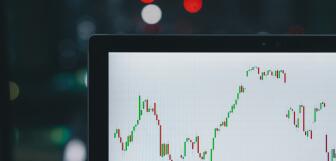
Time series analysis is one of the most widely used forecasting methods, and one that AI handles particularly well. It examines data recorded at regular intervals, like daily sales or monthly website visits, to identify patterns such as trends, seasonal peaks and recurring cycles. Those patterns are then used to project future demand. It’s reliable and data-driven, especially for established products with a few years of history behind them. Its weakness is that it relies on the past repeating itself, so unexpected events can throw it off course.
Short-term demand forecasting
Short-term forecasting covers the coming days, weeks or months, usually up to and no more than a year. This is the forecasting that shapes everyday decisions: how much stock to reorder, how many staff to roster on a Saturday, or whether to run a promotion next week to try and counter a potential dip in sales. Because it deals with the near future, it tends to be more accurate, and it lets you react quickly to changes like a heatwave or a viral social media post. Its narrow focus, though, means it won’t help much with bigger strategic questions and larger growth plans.
Long-term demand forecasting
For those bigger questions, you need long-term forecasting. Typically looking one to five years ahead, it helps you decide whether to move to larger premises, hire more staff on a permanent basis, invest in new equipment or enter a new market. It focuses on broad trends rather than week-to-week fluctuations, giving you a roadmap for growth. Naturally, the further ahead you look, the less certain things become, so long-term forecasts work best as a guide that you revisit regularly rather than a plan set in stone.
In practice, most businesses combine these approaches, and that’s exactly where AI comes in.
Why is AI so good at demand forecasting?
Traditional forecasting often relies on spreadsheets and a lot of time and effort. AI changes that. Here’s why it’s become such a powerful tool for predicting demand:
-
It processes enormous amounts of data quickly. AI can analyse years of sales records, website traffic and customer behaviour in minutes, uncovering insights that would take a person weeks to find manually.
-
It spots patterns humans miss. Machine learning can detect subtle connections, such as how rainy weekends affect online orders or how one product’s sales influence another’s, that might never show up in a standard report and that a human eye simply wouldn’t notice.
-
It factors in outside influences. AI tools can easily combine your own data with external information like weather forecasts, local events, holidays and economic trends, blending the strengths of active forecasting in one place, and creating more comprehensive forecasts.
-
It learns and improves over time. As new sales data comes in, AI models compare their predictions with what actually happened and adjust accordingly, so forecasts become more accurate the longer you use them. They improve faster than human forecasters.
-
It updates in real time. Rather than relying on a monthly review, AI can refresh forecasts daily or even hourly, helping you react quickly to sudden spikes, like a product going viral, before shelves run empty.
Best of all, these tools are now affordable and accessible enough for businesses of any size!
How can small businesses use AI in demand forecasting?
You don’t need a data science team to benefit from AI forecasting. Many tools plug straight into systems you already use, like your point of sale, online shop, or accounting software. Here are three of the most valuable ways to put them to work.
Managing stock levels
Inventory is where most small businesses feel the impact first. AI tools analyse your sales history alongside seasonality and trends to predict how much of each product you’ll need, and when. Some will even flag when to reorder or sync with ordering systems to place orders with suppliers automatically. The result is fewer stockouts, less cash tied up in slow-moving products, and less waste, which is especially valuable if you sell perishable goods like food or flowers where accurate forecasting can protect your profits.
Planning staff rotas
Too many staff on a quiet afternoon eats into your margins, while too few on a busy Saturday leaves customers waiting and costs you sales. By predicting footfall and order volumes, AI helps you build rotas that match demand hour by hour. It can account for school holidays, local, national, and international events that will influence footfall, as well as the weather. Better scheduling also means fairer shifts and less last-minute scrambling, which goes a long way towards keeping your team happy in addition to keeping your running costs to a minimum.
Controlling cash flow and spending
When you know what’s likely to sell, you can plan what you’ll spend and when. AI forecasts give you a clearer view of incoming revenue, helping you time large purchases so they don’t create cash flow issues, manage supplier payments, and set realistic budgets that utilise your capital without leaving you vulnerable. This is particularly useful when margins are tight and a single bad month can cause real strain. Accurate forecasts can also strengthen applications for loans or investment, showing lenders you have a solid grasp of your numbers.
While the above uses are some of the most common for using AI forecasting, it can also help your small business with:
-
Pricing: timing discounts or adjusting prices based on predicted demand.
-
Product launches: gauging interest before committing to large orders.
-
Marketing: scheduling campaigns for when customers are most likely to buy.
-
Slow sellers: spotting products to discount or discontinue early.
Planning for Q4 with AI demand forecasting
Q4, often called the golden quarter, is the busiest and most lucrative time of year for many small businesses. It’s also when forecasting mistakes are most costly. Here’s how to use AI at every stage of the season:
-
Review last year’s data (September). Before the rush begins, feed your previous Q4 sales into your AI tool. It will highlight which products peaked, when demand started to surge and where you ran short, giving you a clear, evidence-based starting point for this year’s plans rather than relying on memory. This way, you can prepare more staff and stock at the right point when sales start to rise.
-
Build stock and secure suppliers (October). Use your forecasts to place orders early, before suppliers get stretched and lead times lengthen. AI can predict which lines will sell fastest, so you can prioritise bestsellers, negotiate bulk discounts and avoid tying up cash in products unlikely to move.
-
Plan for Black Friday and Cyber Monday (November). Forecasts help you decide which products to discount, how much to lower prices by and how much extra stock you’ll need for the busiest time in the year. It can also predict traffic spikes, so you can schedule staff, prepare your website and time marketing emails for maximum impact.
-
Adjust in real time (December). As Christmas approaches, check your forecasts daily. If a product sells faster than expected, AI will flag it early so you can reorder, reallocate stock or promote alternatives. If something stalls, you can cut prices sooner rather than being left with excess stock you can’t shift in January.
-
Prepare for the post-Christmas period (late December). Demand doesn’t simply stop on the 25th. AI can forecast Boxing Day sales, gift returns and the January slowdown, helping you plan clearance stock, reduce staffing sensibly and carry useful insights forward, so next year’s golden quarter is even more successful.
Used this way, AI turns Q4 from a stressful guessing game into a carefully planned and very profitable season.
How to set up an AI demand forecaster
Getting started is easier than you might think. There are a few routes, depending on your budget and technical confidence:
-
Use built-in tools. Many e-commerce platforms, point of sale systems and accounting packages now include AI forecasting features. Check what you already pay for before buying anything new. You may already have access to one you didn’t know about!
-
Try a dedicated forecasting app. Standalone tools connect to your sales and inventory data and offer more detailed predictions, usually for a monthly subscription.
-
Use a general AI assistant. Export your sales data to a spreadsheet and ask an AI chatbot to identify trends and estimate future demand. It’s a low-cost way to experiment, just remove any customer details first.
-
Get a custom solution. Growing businesses with complex needs can work with a consultant or developer to build a tailored model.
AI demand forecasting: an easy way to make smarter decisions
AI demand forecasting isn’t hard to access, and it gives small businesses the power to plan with confidence rather than operating on guesswork. AI power lets you process vast amounts of data, spot hidden patterns and improves its forecasts with every bit of data you feed it. Used well, it helps you manage stock, plan staff rotas and control cash flow all year round, and especially during the golden quarter. With built-in tools, dedicated apps and AI assistants all within reach, there’s never been a better time to start.
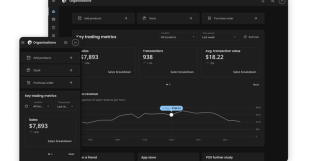
Of course, every forecast is only as good as the data behind it, and that’s where your point of sale comes in. Epos Now, for example, is a leading cloud-based POS system built for and used by over 80,000 small retail and hospitality businesses. As you trade, it automatically collects and collates every transaction, card and cash, turning it into easy-to-read, real-time reports on sales, stock levels, staff performance and customer spending.
You can access Epos Now insights from any device, anywhere, giving you a clear picture of your busiest periods and best-selling products. With clean, reliable data at your fingertips, you’ll be ready to forecast smarter, make better decisions and drive more sales this Q4 and beyond!
Frequently asked questions
- Can ChatGPT do forecasting?
-
Yes, to a degree. ChatGPT and other AI assistants can analyse a spreadsheet of your sales data, identify trends and estimate future demand. It’s a low-cost way to experiment, but it isn’t a dedicated forecasting tool so the results won't be as accurate as with a dedicated tool. It would be worth checking its figures carefully and removing any customer details before uploading your data.
- Can you use AI to do your forecasting?
-
Absolutely. AI can process years of sales data in minutes, spot patterns humans miss, factor in outside influences like the weather and local events, and improve over time. Small businesses can use AI built into their POS or accounting software, dedicated forecasting apps, general AI assistants or a custom-built model.
- What are the four types of demand forecasting?
-
The four most commonly cited types are passive, active, short-term and long-term forecasting. Passive forecasting projects past sales forward, while active forecasting factors in growth plans and market conditions. Short-term forecasting guides everyday decisions up to a year ahead, and long-term forecasting looks one to five years ahead to shape strategy.
- What is the best AI for forecasting?
-
There’s no single best option, as it depends on your budget, data and technical confidence. For most small businesses, the easiest starting point is the AI forecasting built into tools you already use, like your point of sale or accounting software. Dedicated forecasting apps offer more detail if you need it.
- Is ChatGPT predictive AI?
-
Not primarily. ChatGPT is generative AI, designed to produce text by predicting the most likely next words. Predictive AI is built specifically to forecast outcomes from historical data. However, ChatGPT can still help with basic forecasting by analysing your sales data and spotting trends, especially when paired with spreadsheets.