Retail Business Models: Strategies for Retail Success in 2026



As technology evolves, the wild world of retail adapts to make use of new devices, new platforms, and higher expectations from consumers. The consequence of this eternal back-and-forth is that what works in one moment may soon become outdated; your new kit from a few years ago might already be costing your customers.
But given everything retailers need to stay on top of (the fine profit margins, the endless inventory, and day-to-day business management), finding the time and energy to stick to the latest business models feels like an exhausting proposition.
The retail industry may change constantly, but what changes do independent retailers really need to make to their businesses? And what business strategies are worth adopting to stay on top of the competition? We’ve got you covered in this article.
Key takeaways
- A retail business model is a retailer's plan for making a profit by selling finished products directly to consumers.
- Selling across multiple channels while working towards a personalised customer experience is a generally fool-proof retail model.
- Adapt your model by making small changes, like targeting a new customer group or trying a new pricing strategy.
What do we mean by “retail business model”?
Let’s start at the beginning. In the simplest terms, a business model is the company's plan to make a profit! It identifies the products and/or services the business plans to sell, the ideal customers (AKA target market), and any anticipated expenses (such as employee pay, operational costs, and expansion costs). A complete business model includes the company’s key activities, value proposition, resources, revenue and costs, supply chain, target customer and customer/partner relationships.
As suggested by the title, a retail business model is just a business model that is specifically tailored for use in the retail industry. As retailers sell a finished product directly to local customers (also known as B2C or business-to-consumer), retail business models focus on mostly local distribution and competition.
Retailers will often buy in bulk from wholesalers at a low price, selling these items in stores with a high markup. However, that approach is different to the wholesale business model, where purchase volumes are higher, and the retail business model often outsources manufacturing, storage and distribution.
However, when you speak to store owners, Retailers will often describe their business model in one of two ways far remove from the actual supplier system. Instead, they'll think in terms of how they make money, or where they sell.
Retail model by revenue structure
This is about how the business generates its profit. Most retailers follow a B2C (business-to-consumer) model, buying stock from wholesalers and selling it to shoppers at a markup. Some also sell in bulk to other businesses through a wholesale model, such as a trade counter, which brings in lower margins but larger orders. Within the B2C model, retailers usually lean towards one of these approaches:
- Value model. Competing on price, with lower margins offset by higher sales volumes.
- Loyalty model. Building repeat custom through rewards schemes, memberships, or personalised offers.
- Prestige model. Selling premium products at higher margins, backed by an exclusive, high-touch shopping experience.
Retail model by sales channel
This is about where the customer buys. The main channels are:
- Brick-and-mortar. A physical shop where customers can see, touch, and take home products on the spot.
- E-commerce. Selling through your own website or online marketplaces.
- Mail order. Taking orders by catalogue, phone, or post and delivering to the customer's door.
- Social commerce. Selling directly through platforms like Instagram, TikTok, and Facebook.
Many retailers now combine several sales channels, an approach known as omnichannel retail.
Retailers are ready to adapt with an Epos Now POS
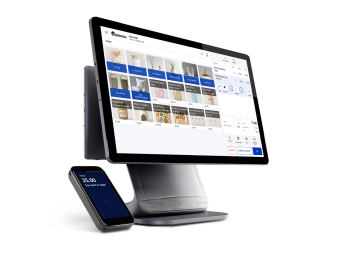
The retail world is fast changing. Be ready for the next change with a flexible Epos Now POS system that can model itself around your needs:
- Choose from hundreds of apps and integrable partner programs to run accounting, marketing, and other back-of-house functions in a way that suits you.
- Streamline transactions with an in-house payment processing service and the latest sales software.
- Stay on top of trade by accessing your latest business data from anywhere using cloud technology.
What do we mean by business strategy?
Business strategy is the long-term direction of the company and is essential to being successful. The strategy explains what a company wants to do, while a business model describes how it will make it happen.
Now we’ve refreshed ourselves with the basics, let’s have a look at what you need to know to get ahead with your retail strategy.
How is retail business strategy changing in 2026?
Consumer confidence remains fragile in Australia in 2026. The Westpac–Melbourne Institute Consumer Sentiment Index fell 4.7% to 80.4 in October, its lowest level in six months and its second monthly drop in a row. With Aussies watching every dollar, the retail industry is more focused than ever on offering value for money.
However, offering value is not easy, with supply chain issues cropping up in many areas. In many sectors, the result is that companies fight to be perceived as value brands, with price comparisons and stores looking for ways to stand out in a distinctive way through their services or products. The current two most popular strategies being used are:
- Bringing technology to your aid. Multi-platform e-commerce, live-stream websales, and social media demonstrations can blur the lines between your marketing and your store.
- Creating a communal atmosphere within your business can encourage customers to spend more time over their shopping, increasing the average spend and creating a closer customer-business relationship.
Let’s delve into a few other popular strategies.
Physical stores and online shopping operate in tandem
In 2026, the consumer experience has become a more important factor for the high street as it attempts to win back shoppers who have been going online more and more for their purchases.
The experience-led business model prioritizes the actual trip to the store ahead of, or on a level with, traditionally important elements of business, such as price value. However, this applies very differently in the e-commerce world. And of course, with many high-street stores operating across multiple channels, such as a shop and a website, many retail businesses need to consider the experience of the customer online, as much as in-store, to ensure that their model can capture every kind of customer.
The customer is the ultimate decision-making authority
Gen Z is now firmly established as a core retail demographic, and Gen Alpha is starting to enter the market as the next generation retailers need to plan for. As a result, retailers are incorporating their values and tastes to capture as many of these new shoppers as possible. This means:
- Adapting to become more sustainable. Gen Z has grown up with the shadow of climate change looming over them and is, therefore, the most environmentally conscious consumer. Retailers with high carbon operations will need to change to survive, and 2026 should see more change than ever before.
- Diversification. Whether it's TikTok, Twitter, pop music, or Hollywood, Gen Z is as socially conscious as it is environmentally conscious. Retailers are therefore becoming as inclusive as possible in their marketing models, staff policies, and even in their product lines. Your customers come from every background, and Gen Z shoppers want to see everyone included and represented.
- Personalization. Following in the wake of personalized and targeted marketing, retailers online and off are looking to make the shopper's experience more friendly and personal. In high-end retail, this might mean a 1-to-1 customer and staff walkthrough. But for the wider retail sector, this might mean using customer data collection to learn the names of customers and accessing their sales history to make personalized recommendations. Hitting the mark on customer preferences is one of the best ways to make those extra sales.
How should your retail business model develop in 2026?
If Gen Z are changing consumer behaviour and everyone from convenience stores to e-commerce apparel sites are altering their retail strategies to stay on top, what are the concrete strategies you can apply to your operating model to outthink your competition?
Set new target customer bases
No matter what kind of retailer you are, some of your products will be more popular with certain demographics of the population. If you are an independent retailer selling sports gear, your demographic will be fairly broad, but you can target specific kinds of sports players by expanding product lines focused around those sports.
You can then market those lines widely and create window displays and in-store marketing strategies to create an appealing experience for those consumers. This does not mean ignoring other types of customers. Rather, it means utilizing different parts of your retail space to appeal to different consumers.
Employ a new pricing policy to market your products
Many smaller store owners use more straightforward pricing policies that can be easily calculated and applied to all products. For instance, cost-plus pricing takes the wholesale price from further up the supply chain and adds a set percentage to that product to create a reasonable profit margin for the store.
However, some more complex and even counter-intuitive retail model approaches can create better results for the business and final customers. Loss-leader pricing is a great example of this: selling a product at an expense to the business, providing extraordinary value to the end consumer, and making money back on other products sold at a higher price.
Loss-leader and other pricing models are employed by all the larger retailers, and smaller store operations, non-store retailers, or those in physical retail can all compete using these kinds of strategies which help many retailers appeal to all customers, young and old.
Looking for retail business examples? Well, Costco's rotisserie chicken is one of the best-known examples of loss-leader pricing. The retailer has kept the price at an increasingly impressive $4.99 since 2009, even though it reportedly loses $30 to $40 million a year in gross margin to hold it there! The chickens are placed at the back of the store, so shoppers walk past plenty of other products to reach them. The approach clearly works: Costco sold 137 million rotisserie chickens in 2023, up from 51 million in 2010.
Become the model of success with an Epos Now POS system
POS technology makes adapting to changes in the retail industry far easier. Epos Now systems offer users hundreds of ways to tweak their business operations in every field while providing the top transaction and product management software all retailers require.
Import and manage thousands of products at a time and sell cross-channel without risk of over-selling or failing to provide anything but the best service. Retain your customers with Mailchimp's email marketing aids, tidy your accounts with Sage or Xero's accountancy software, and adapt to the challenges you face as a retailer in the 2020s:
- Create bespoke transaction setups on secure, speedy software to shave time off the sales process.
- Purchase all retail hardware and software and receive expert advice and support around the clock to get the best out of your business.
- Know your business better with detailed, downloadable reporting on every part of trade, from products and sales to staff and customers and much more.
- Access new areas for trade with easy-start online sales platforms like Wix and WordPress webstores.
To find out more about Epos Now retail POS and hospitality POS solutions, submit your details below to speak to a member of our expert team.
Frequently asked questions
- What are the main types of retail business models?
-
Retail business models are usually grouped in two ways. By revenue structure, you'll find value, loyalty, and prestige models, each with a different approach to pricing and profit. By sales channel, retailers sell through brick-and-mortar shops, e-commerce, mail order, or social media, and many combine several of these.
- Is dropshipping considered a retail business model?
-
Yes. Dropshipping is a form of e-commerce retail where you sell products without holding any stock. When a customer places an order, your supplier ships it directly to them. It cuts storage and inventory costs, but margins tend to be thinner and you have less control over delivery and quality.
- What's the difference between a B2B and a B2C retail model?
-
A B2C (business-to-consumer) retailer sells finished products directly to shoppers, usually buying from wholesalers and selling at a markup. A B2B (business-to-business) model sells to other businesses instead, typically in larger volumes at lower prices. Some retailers do both, for example by running a trade counter alongside their main shop.
- Can a retailer combine an online and physical business model?
-
Absolutely, and many successful retailers do. Running a shop alongside a website or social media store lets you reach customers wherever they prefer to buy. The key is keeping stock, pricing, and service consistent across every channel, and a POS system that syncs your inventory makes this far easier.
- Which retail business model tends to have the highest profit margin?
-
The prestige model usually has the highest margins per item, since customers pay more for premium products and an exclusive experience. But high margins don't always mean the highest profit. Value retailers accept lower margins but make up for it by selling in much higher volumes. The right model depends on your customers.
Join Epos Now for modifiable software and flexible hardware to suit your industry
trusted by over 55,000 businesses worldwide.