
Why POS Data Analytics Drives Smarter Decisions for Small Businesses
If you’ve got an endless list of questions running through your mind with no clear answers, you’re like most business owners. Thankfully, there’s an easier way to get answers. Look to your point of sale (POS) system.
POS systems like Epos Now’s Complete Solution gather enormous amounts of data that can help drive smarter decisions. They operate in real time, but store all of the data from the moment you start trading with them. Not only that, but they turn that data into business reports that are easy on both the eye and the mind. This sounds too good to be true?
All we need to do is figure out how to turn that data into the decisions that bring a boost to your business. And that’s what we’re doing today. We’re going to look at:
-
What POS data is
-
What reports your POS system creates
-
How to make better decisions for your business using POS data
Once you’ve finished reading this blog, not only will you know how to get answers to questions about your business, you’ll know how to trade more effectively. Get ready to take a big leap forward in business management. Let’s go!
What is POS data?
Before we get into the complexities of POS data analytics, let’s get crystal clear on what POS data is.
In the simplest terms, POS data is the details of your business operation that your POS system collects. While a lot of POS data is oriented around transactions, this also includes areas like staff work hours (your POS notes when a staff member clocks in and out, calculating the length of their shift and the wage due for the work in the process).
Generally, though, POS data includes sales information, refunds, and discounts, which combine to help business owners get a clear understanding of business performance. This information, on a good system, is incredibly detailed. It includes the products bought, the customer and staff member involved (if they’re on their accounts), the date and time of the sale, and the method of payment. Combined, each sale updates data on your stock, financials, and customers all at once.
Your POS system, given that it’s responsible for inventory and sales, already plays a key role in your business. Without POS data, you would only know what you personally see and hear, which makes the decision-making process a lot more difficult, especially for a larger business. That’s why your POS data is such an important part of your business.
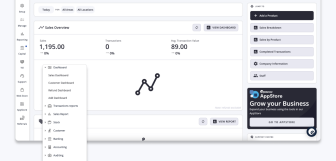
What reports does your POS system create?
Given the amount of information POS systems are exposed to, and the data they store, it’s important to know what kinds of reports you can expect them to generate using that data.
Depending on the POS system you use, you might have access to anything from a small handful to hundreds of detailed, downloadable business reports. Knowing what the industry standards are can not only help inform your decision when choosing a POS system, it can also help you get ahead of your competition. More data means more knowledge and smarter decisions, after all!
So, here are the different areas of POS reporting and the kinds of specific reports you might see in each field:
Transaction reports
Transaction reports are the nitty gritty details of the POS data world. They tell you the specifics of every sale your business has ever made (yes, your POS remembers it all). If, at 11:52AM your bakery sold a bagel, your POS will tell you which kind, how much it cost, who sold it, and how it was paid for.
These reports are extremely helpful when a customer wants to a refund, make a complaint, or just wants to praise their server to a manager.
Sales reports
Unlike transaction reports, sales reports show the bigger picture of the business. These analytics detail the performance of the business from many angles, including time-based comparison reports that tell you whether your business performance is good or bad during certain hours, days, weeks, months or even years.
Other parts of your sales reports include analytics of brand and supplier performance, promotion impacts, till and site comparisons.
Sales reports allow you to discover when and where the business performs so you can isolate which factors make the biggest difference and adjust your sale strategy to take full advantage!
Product reports
Here is one of the juiciest and most important reporting areas: products! Your product reports don’t just tell you how many of each product you’ve sold (although that in itself is a crucial part of the analytics). They tell you everything you really need to know about product performance.
A retailer’s best-selling product might be something small like, say, grapes. But sell 100 grapes and you’ve not made very much money. Thankfully, your POS data will also tell you how much profit you’re making from each product. That way, you’ll know which products are keeping you afloat, and which are secretly holding you back even as they sell.
Stock reports
Your stock reports offer many key insights into the inventory you’re holding, such as how much of your money is currently stored in the form of saleable products. It also shows how long you’ve been holding some of your stock. This can help you work to improve your stock turnover.
Stock reports are a popular section of POS analytics as they’re also the kind many business owners look at on a daily basis. Reports like the low-stock sheet show which products are in danger of running out, which help ensure resupplying happens in a timely manner.
Staff reports
When your staff clock in and out, your POS notices. It tracks the amount of time they work which, combined with their hourly rate, it uses to automate your payroll and develop a report on how much you owe your team.
But your POS data can also let you know who in your team is over or underperforming. You can access reports on sales split by employee so you know who’s selling and who’s not, informing your conversations with your team and notifying you when someone needs a nudge.
Financial reports
For tax reasons, businesses need to track a lot of financial data, but your point of sale can take care of all the legally required financial analytics, and a whole lot more.
Financial reports on a good point of sale will include sales from each day (EOD reports); payout, discount, and refund figures; gratuity tracking; as well as bookkeeping reports which need tax amounts in daily, weekly, monthly, quarterly, and yearly form.
Extensive, but all advantageous, from big picture financial reporting to the detailed transaction report, your POS system gives you every opportunity to access the data you need in easy-to-read reports.
How to make better decisions for your business using POS data
Checking on your business reports is as easy as clicking a button. But the difficult part is finding ways to use that data to make real, tangible, and positive changes to your business. Nevertheless, now you know what the reports can tell you, you’re this close to making data-led decisions. Here are a few ideas to get you started.
1. Spot sales trends
When your product tells you what’s selling and what’s not, you can make adjustments to replace struggling stock, put your best sellers front and centre, and run promotions and offers to make more sales. You can also use this data to achieve specific targets.
Maybe you want to sell more items per basket/cover, encourage repeat custom, or reduce wastage. Whatever your goals, informing your decisions with sales data makes coming up with an informed sales strategy much easier!
2. Optimise efficiency across the board
Your business performance isn’t just about making the sale; there are all kinds of things that eat away at that profit margin, from payroll to wastage to utilities. Use reports such as sales by hour to know when you can get back on staff hours, check how long stock has been sitting on shelves to know which products to drop, and use all the reports you can to make sure your business runs as efficiently as possible!
3. Strengthen customer relationships
If your business uses customer profiles, you’ll have reports on individual habits. Your business can use these to offer targeted offers and marketing suited to their preferences to keep these customers loyal to your business. The more you understand them, the more effective your marketing can be.
4. Improving cash flow
When you run short on cash, you can use your POS data analytics to look at where your money is currently tied up. Often, this is in the stock on your shelves. Running a promotion to get rid of stock that’s not been moving is a great way to free up some cash and remove a little stress from your day.
Beyond turnover, you can also look at wastage and the record of payouts and cash withdrawals you’ve made from your drawer to see where all your money is going and find ways to cut back!
5. Financial planning and legal compliance
If you don’t track your finances properly, you could find yourself in trouble with the government. Fortunately, your POS analytics also simplifies your tax reports, which you can also export to popular accounting programs such as Sage, Xero, and Quickbooks.
Staying compliant, while being a smart decision in and of itself, also helps your accountant give you better advice for tax management and plan your financial year with a clear picture of your situation, avoiding large growth investments when you’re not in an appropriate financial state.
POS data analytics: a valuable tool for all business leaders
Ultimately, turning your POS data into smart business decisions is easy if you’ve got a smart POS system that turns that data into easy-to-read reports. That’s why, when you make your POS purchase, the business reports it makes should be a top priority. Epos Now’s Complete Solution, for instance, has a leading POS reporting package your business can use to make actionable decisions every day.
Whether it’s adjusting prices, talking your team through sales strategies, or making stock changes, your POS data analytics are a crucial part of your arsenal that helps you drive sustainable growth. When you use your POS data effectively, you’re not just reacting to what’s happening — you’re shaping what happens next.