How to Reduce Waiting Time in Restaurants



If you're anything like us here at Epos Now, you won't like waiting in line... especially when hunger’s involved. And that goes for business owners too. Having long wait times at your establishment can deter customers from returning, and damage your profits in the long run.
That said, many of us have come to accept that waiting at/for a table at your favourite restaurant is just something that comes with the popular people-based nature of the hospitality industry.
But what if there were ways to drastically reduce your restaurant waiting time? Well, it just so happens, that we've compiled a list of savvy strategies, so you can learn how to reduce waiting times in your restaurant.
Why wait? Let's queue jump straight into it...
Key takeaways. How to reduce waiting times in restaurants:
- Diagnose the bottleneck. Identify whether customers are waiting for tables, to order, or to pay
- Use technology. Ordering systems, table planning software, and SMS updates cut queues automatically
- Enable pre-ordering and pre-booking. Let customers skip the line by ordering or reserving ahead
- Train staff for speed and proactivity. Efficient order-taking and a customer-first attitude keep lines moving
- Manage expectations. Tell customers about wait times upfront so they're patient, not frustrated
- Offer queue busters. A free drink or small perk makes waiting feel worthwhile
- Streamline payments. Fast, adaptable POS systems prevent bottlenecks at the end of the meal
- Schedule staff around peak times. Enough hands on deck during busy periods prevents backlogs
Understand why customers might be queueing
The first step to reducing wait times is understanding why your customers might be queueing in the first place. Are they waiting for a table? Maybe they're queuing to order food at the counter? Once you know where the bottleneck is, you can start to put measures in place to reduce the queue.
Promote pre-ordering
If you know your restaurant is going to be busy, offer pre-ordering. This way, customers can order their food in advance and skip the queue when they arrive. Pre-ordering can also be done via your restaurant's app or website.
Turn to technology
In today's day and age, you place yourself at a disadvantage if you don’t turn to technology to help reduce waiting times.
By implementing an ordering system or table planning software, you can take customer orders in advance, and manage your space more efficiently, meaning they don't have to queue when they arrive at your restaurant.
Whether it's SMS marketing tools to say when food’s ready or investing in a queue management system to take virtual orders, there are plenty of tech-based solutions available to help you reduce waiting times. Here are a few more examples:
QR-code ordering
QR-code menu ordering lets customers scan a code at their table to pull up your menu and place an order directly from their phone, cutting out the wait for a server to take it, and letting them do it whenever they're ready. This is especially effective during peak hours, when staff are stretched thin and every minute spent taking orders is a minute not spent serving food. It also reduces errors, since orders go straight to the kitchen without being relayed verbally. Many systems also allow split billing and payment through the same QR code, further speeding up turnover, so both ordering and payment processes are fully automated.
Pay-at-Table with Handheld Ordering Devices
Handheld ordering devices let customers order and pay at table, removing the need for staff to walk back and forth to a fixed till. This cuts down on both order and payment waiting times, since food details are sent to the kitchen instantly and customers can pay the moment they're ready to leave. It's particularly useful for larger parties or split bills, where traditional payment methods can create bottlenecks. Staff can also serve more tables per shift, since less time is spent queuing at a POS terminal. The result is faster table turnover and a smoother experience for customers who don't want to wait for their check.
Kitchen Display Systems (KDS)
A kitchen display system replaces paper tickets with digital screens that show incoming orders in real time, helping kitchen staff prioritise and track dishes more efficiently. Orders can be colour-coded by wait time or course, so nothing gets missed or delayed during a rush. KDS also syncs with front-of-house systems, so waiting staff know exactly when a dish is ready to be served, cutting down on food sitting under a heat lamp or going out late. This tightens up the whole kitchen-to-table process, reducing ticket times and helping restaurants handle higher volumes without sacrificing speed or order accuracy.
Encourage group ordering
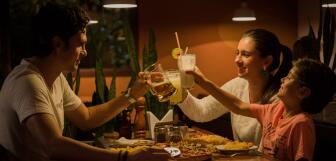
If you have a big group dining with you, encourage them to order their food at the same time. This way, they can all eat together and you can avoid having customers queue up to order individually.
Offer a loyalty card scheme
Loyalty schemes are a great way to encourage customers to keep coming back, and they can also help reduce waiting times. By offering loyalty cards, you can give customers who frequently visit your restaurant priority seating or queue jumping privileges. This is a great way to show your regular customers that you appreciate their business.
Train your staff
It’s crucial that you train your staff on how to deal with waiting, and we're not talking tables. They should be able to take orders quickly and efficiently, without keeping customers hanging around. When they do see a customer waiting they should also be able to react accordingly:
From managing customer satisfaction to learning how best to serve up queue busters, your staff should be equipped with the knowledge and skills they need to work at optimal efficiency.
Staff should also be trained in upselling and cross-sell, so they can also maximise sales while minimising queue times. As well as specific training, your staff should also be encouraged to always be proactive. If customers see apathy from your staff, it's likely to disgruntle customers and affect your levels of customer retention in the long run.
Manage customer expectations
If customers know in advance that there may be a wait, they're more likely to be patient and less likely to walk away. By managing customer expectations from the get-go, you can avoid any queue-related complaints further down the line.
Offer queue busters
Queuebusters are small, low-cost items that can help to alleviate the pain of queueing. Whether it's a complimentary drink or a voucher for their next visit, queue busters can help to sweeten the deal for customers who are stuck in a line. If you have to keep your customers waiting, at least make it appetising - providing a high-quality queue-buster can make your patrons feel valued despite the queue.
Encourage pre-bookings
Don't have reservations about well.. reservations. By encouraging customers to pre-book their tables, you can help to reduce the number of people who are queueing on the day. This is especially effective for busy restaurants that know they're going to have a full house.
Renovate your front-of-house
If you offer both eat-in and takeaway options, it's important to have separate queueing areas for each. By renovating your front-of-house, you can create a more efficient queueing system that will help to reduce waiting times for both eat-in and takeaway customers.
In addition to queue management, you should also focus on making sure that your restaurant is clean and tidy. A cluttered restaurant is likely to result in longer queue times, as customers will take longer to peruse the menu and make their decision.
By renovating your front-of-house and queueing system, you can create a more efficient and effective dining experience for your customers.
Check yourself
If you want to reduce waiting times in your restaurant, you need to check yourself when it comes to your payment processing. Once customers have finished their meal, they don't want to wait around for the bill. If you keep them waiting, they're likely to become impatient and could even walk out without paying.
To avoid this, it's important to make sure that your staff are trained on how to process payments quickly and efficiently. In addition, you should also consider investing in state-of-the-art POS hardware like Epos Now's restaurant POS or a queue-busting system, such as a mobile payment app.
Contactless payments are one of the simplest ways to cut payment times. Tapping a card or phone takes seconds compared to chip-and-PIN or cash, and it removes the need for staff to count change or wait on authorisation delays. For a busy restaurant processing dozens of transactions an hour, those saved seconds add up quickly across a full service.
Pay-at-table solutions, whether through handheld devices or QR codes left on the table, take this a step further by letting customers settle their bill the moment they're ready and without flagging down a server or waiting for a card machine to be brought over. This is particularly effective for large groups, where splitting a bill at a counter can create a bottleneck for other diners waiting to pay.
Together, contactless and pay-at-table options shrink the gap between "finished eating" and "table free," which directly improves table turnover, letting you seat and serve more customers during peak hours without extending your dining room.
Schedule your staff
You can avoid the rush by scheduling more staff during your busiest times. This will help to ensure that there are enough staff members on hand to take customer orders quickly and efficiently.
In addition, you should also consider scheduling breaks for your staff members. By doing this, you can avoid having too many people on the floor at once, which can lead to longer queue times.
See your restaurant serve up success with an award-winning POS system
Epos Now offers state-of-the-art POS systems built to help hospitality businesses cut waiting times and run a faster, more efficient service. From portable POS devices to QR code ordering, our tools are designed to eliminate the exact bottlenecks covered in this guide, whether that's queuing for a table, waiting to order, or waiting to pay.
Speed up every stage of service, including:
- Portable POS. Take orders and payments anywhere in the restaurant, cutting out trips back and forth to a fixed till
- Table ordering and QR code solutions. Let customers order and pay directly from their table with order & pay, reducing pressure on front-of-house staff during peak hours
- Kitchen display systems (KDS). Replace paper tickets with real-time digital orders, so kitchen and front-of-house stay in sync and dishes go out faster
- App integrations for click & collect and delivery. Manage online and in-person orders from one system, so takeaway customers get a dedicated, queue-free process of their own
Find out more about Epos Now's POS systems here, or have a read of one of our other handy restaurant guides:
- The modern restaurant tech stack
- Managing restaurant reservations
- Kitchen staff duties and responsibilities
- Coffee shop organisational structure
Frequently asked questions
- How can restaurants reduce waiting times?
-
Restaurants can reduce waiting times by identifying where bottlenecks occur, then addressing them with pre-ordering, table planning software, QR code ordering, and handheld payment devices. Training staff to work efficiently, managing customer expectations, and scheduling more team members during peak hours also helps keep queues moving and customers satisfied.
- What causes long waiting times in restaurants?
-
Long waits are usually caused by bottlenecks at specific points: customers queuing for tables, waiting to order, or waiting to pay. Understaffing during busy periods, slow manual payment processing, and relying on paper-based ordering or kitchen tickets instead of digital systems can all compound these delays further.
- Does a restaurant POS system help reduce queues?
-
Yes. A good POS system like Epos Now's speeds up order-taking and payment processing, syncs with kitchen display systems to reduce errors, and provides reporting on peak times to improve staff scheduling. Features like contactless and pay-at-table payments also cut the time customers spend waiting to settle their bill.
If you simply can't wait to reduce the hold up for hungry customers, then we'd love to hear from you!