
How to Reduce Workplace Costs in 2026



Running a business in 2026 costs more than it did just a few years ago. Energy bills are higher, staffing costs have risen, software subscriptions have quietly multiplied, and the pressure on margins shows no sign of easing.
The good news is that most businesses have more room to cut costs than they realise. Small, targeted changes across energy, software, procurement, and operations can reduce business overheads by 10–30% annually and with the right business systems in place, most of them are simpler to action than you'd think.
This guide covers ten practical cost-saving ideas for businesses in 2026, from quick wins you can action this week to structural changes that will pay off for years. Whether you run a retail shop, a restaurant, or a service-based business, the principles are the same: track what you spend, cut what you don't need, and make every pound work harder.
1. Use energy-efficient appliances
When was the last time you invested in quality appliances? Whether you need kitchen equipment, digital displays, or office computers, you want to use modern, energy-efficient devices.
How much can you save with these appliances? Matt Daigle, an expert in sustainable home improvement, states that Energy Star appliances can save you between 10% to 50% of the energy required[1][2].
While these energy savings do not always lead to a 10% to 50% reduction in costs, they still can be quite significant. So, if your appliances are outdated or stop working, make sure to look for Energy Star products to reduce expenses.
2. Turn off devices at the end of the day
Even if you have modern, energy-efficient appliances, you want to encourage your employees to reduce power consumption as much as possible. All too many people leave devices running at all hours, leading to higher operating costs that only you will see. By instructing employees to turn off these “energy vampires,” you can reduce your monthly energy bill by up to 20%[3]!
3. Repurpose old items
Creating your own displays and decor is a fun and efficient idea for the workplace. In many cases, it costs nothing aside from your time to repurpose items into retail displays for your store. Not only will this save you from buying shelves and other equipment, but it will also add to the charm and appeal of your business.
Depending on the style of your business, this may manifest very differently. For example, you can use old cabinets and wardrobes to hold items instead of standard metal shelves. Likewise, you can store candies and small items in glass jars, instead of buying bins from a distributor.
There are many guides for design inspiration online for upcycling, reusing and more.
4. Improve your bookkeeping
Taking control of your finances is one of the first and most important steps in reducing expenses. After all, how can you identify and track cash flow, income and accounts if you don’t know what to look for?
Efficient business management in the 21st century often begins with data collection, often gathered by an EPOS system or integrated accounting software, which most large companies have been using for many decades.
Using this technology, you can save costs come tax season. Since your accounting program logs all your financial records, you can provide your accountant with all the documentation they need. Having all the right supporting documents also allows the accountant to complete their work more quickly and cheaply.
5. Reduce software & subscription waste
Most businesses are paying for software they don't fully use. Licences that were set up for a team member who left, tools that duplicated something you already had, subscriptions that auto-renewed without anyone noticing, it adds up faster than you'd think. Industry research suggests the average business wastes 20–30% of its total SaaS spend on unused or underused tools.
The fix is straightforward: run a software audit. Pull together every subscription your business pays for, both monthly and annually, and ask three questions about each one: Is it being used? Could something we already pay for do the same job? Is there a cheaper alternative that does enough?
Here's a simple process to follow:
- List every software subscription and its monthly or annual cost
- Check usage data or ask the team who actually uses it and how often
- Cancel anything unused immediately
- Consolidate where possible; paying for three separate tools that overlap is rarely necessary
- Set a reminder to review subscriptions every six months
6. Make smarter staff schedules
Many business owners struggle to keep labour costs low. From paying wages to spending money on interviews and background checks, employers invest a great deal in human resources.
With a modern point of sale system, you get access to detailed business analytics and staff scheduling software. This information is very useful when it comes to building staff schedules. By charting your busy and slow times through detailed seasonal, weekly, and daily sales data, you can better optimise your staff schedule.
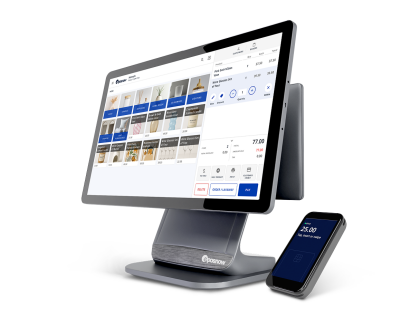
No matter your industry, retail or hospitality, Epos Now's tills are tried and tested time-savers.
Benefit from:
- Integrated card payment systems
- Quick and easy product management
- Flexible reports on everything from stock levels to staffing
- Hundreds of apps to adapt your system to your business needs
- Expert support to ensure you get the most out of your produce
7. Build your own online ordering website
Whether you own a store, restaurant, or service-based business, once established, websites can increase the efficiency with which you make sales and gain new customers.
Unfortunately, too many small businesses use marketplaces or web builders that charge high fees that severely cut into profit margins. Most EPOS systems have integrated online platforms that provide innovative cost-saving ideas and options for the eCommerce industry.
For retailers, this can mean moving away from eBay and Amazon to a professional eCommerce website. Platforms like Shopify make it easy to build a website, collect payments, and manage your inventory. Best of all, some integrate with your point of sale so you can track data in-store and online.
For hospitality businesses, you may not need a full website, but you can reduce your reliance on services like UberEats. These mobile ordering companies make takeout and delivery easy, but they charge high fees that often lead to lower margins.
Instead, you can use a service like Epos Now Order and Pay to build a simple online ordering platform. Customers can view your menu, place an order, and pay all from their mobile device or computer. This way, you get more control over the experience and can provide online ordering on your terms.
8. Reduce employee turnover
While it is easier said than done, discouraging employees from leaving your business is a solid way to reduce costs that you should practice full-time. Each time you retain an employee, you save the money needed for placing hiring ads, staffing interviews, and processing paperwork. On top of this, you avoid having to train a new hire, increasing your labour costs for some time. So keeping morale and motivation high in your team is a great way to cut costs.

According to one Forbes contributor, here are five ways to reduce turnover[4]:
- Hire the right people: Find employees who can succeed at the job, plan to stay for a while, and fit your culture.
- Offer competitive pay and benefits: Pay employees what they are worth. Otherwise, they will leave when a new opportunity appears.
- Give praise: Show your staff that you value their effort. While many people work mostly for the money, they also want to have a friendly work environment.
- Show the career path: Offer regular check-ins with employees and show how they can grow with your business.
- Allow flexible work schedules: Give your workers freedom when they need it. While you do not want to interrupt operations, allowing for flexibility can increase job loyalty.
9. Improve inventory management
Your inventory is meant to make you money, but it could actually be hurting your bottom line. When products sit on shelves for far too long, you take a loss when you liquidate them at a lower price. Likewise, when items are lost or stolen, you increase your shrinkage costs.
With a reliable inventory management system, you can keep track of all your items and get complete oversight. Not only can you see accurate stock levels, but you can also analyse how items sell. For example, if certain products are slow to sell, you can stop carrying that item to reduce overstock issues.
When implemented and used correctly, your inventory management system will help increase profit margins by reducing wasted spending.
10. Shop for better payment processing
Imagine a retail store earns £30,000 in revenue per month. If Company A charges a 3% processing fee, the store pays £900 per month to its processing company. If Company B charges a 2.5% fee, the store pays £750 per month to the company.
In this example, the store would save £1,800 per year by switching to Company B.
When it comes to credit card processing, failing to shop for the best rates can cost you thousands of pounds in the long run.
Hidden workplace costs
These are the less obvious costs that many businesses overlook. Unlike rent or energy bills, hidden costs don't show up on bank statements; instead, they accumulate quietly across dozens of small inefficiencies that seem like no big deal but collectively end up causing you extra financial stress.
Here are the most common ones to look out for:
Inefficient meetings: A one-hour meeting with five members of staff isn't a one-hour cost; it's a five-hour cost. Meetings that could have been an email, or that run over without a clear outcome, represent significant lost productivity across a year.
Employee downtime: Unplanned gaps in the working day, waiting on slow systems, unclear processes, and poor task allocation all chip away at productive hours. Even 30 minutes of avoidable downtime per employee per day adds up to weeks of lost output annually.
Onboarding inefficiencies: High staff turnover combined with a slow, unstructured onboarding process means new hires take longer to become productive. The business absorbs that cost in lost output and management time, often without ever quantifying it.
Shadow IT: Staff using their own tools, apps, or workarounds because the official systems are too slow or difficult. These tools often aren't approved, aren't secure, and create data gaps that cost time to untangle later.
Untracked expenses: Small purchases, ad hoc supplier payments, and one-off costs that never get properly categorised. Individually minor, but collectively they obscure the true cost of running the business and make it harder to identify where savings are possible.
While you probably can't eliminate every single inefficiency, it's worth thinking outside the box when it comes to cost savings. If you want to know more about building a cost reduction strategy for your business, our guide to cost focus strategy is worth a read.
Quick wins vs long-term cost savings
Not every cost-saving idea requires the same time or effort to implement; some can be actioned this week with immediate results, while others may take planning but deliver far greater returns over time. It might be tricky to figure out which to action first, so here's how to think about prioritising them:
Immediate savings (0–30 days): These are the low-effort, high-speed wins that cost nothing to implement and show results on your next bill or payslip.
- Turn off devices and energy vampires at the end of every day
- Run a software audit and cancel any unused subscriptions immediately
- Review your payment processing rates and get a comparison quote
- Set up automated reminders for staff scheduling to reduce unplanned overtime
Medium-term savings (1–6 months): These require a small investment of time or money upfront but pay back quickly.
- Switch to A-rated or energy-efficient appliances, once existing ones need replacing
- Introduce a structured onboarding process to enhance new hire productivity
- Build or migrate to your own online ordering platform to reduce third-party commission fees
- Implement an inventory management system to reduce overstock and shrinkage
Structural changes (6–24 months): These are the bigger moves that take longer to set up but deliver the most significant long-term savings.
- Review your office space requirements and consider downsizing or subleasing unused space
- Invest in a modern POS system that consolidates sales, inventory, staffing, and reporting in one place to reduce the number of separate tools you pay for
- Build a regular supplier renegotiation cycle into your calendar to ensure you're always on competitive rates
- Develop a cost tracking dashboard for maximum visibility of spending
The businesses that reduce costs most effectively tend to do all three in parallel: quick wins fund the medium-term investments, and the structural changes lock in savings for years. Successful businesses consistently prioritise making time to audit processes, examine current costs and identify where inefficiencies have quietly taken root before they become a permanent drain on the business.
How to calculate workplace cost savings
Economising is important, but you don't want to go chopping costs left and right. For best results, it's important to approach cutting workplace costs methodically, with the help of a simple five-step framework.
Step 1: Identify the cost category. Start by listing your main cost areas: energy, staffing, software, rent, procurement, and payment processing. Don't try to tackle everything at once; instead, pick the two or three categories where you suspect the most waste and go from there.
Step 2: Measure your baseline spend. Pull together what you currently spend in each category, monthly and annually. Use bank statements, supplier invoices, and your accounting software to get an accurate figure. The more informed you are, the easier it will be to make meaningful changes to your business.
Step 3: Apply a realistic reduction estimate. Use the benchmarks to estimate what's achievable. Energy efficiency measures can reduce bills by 10–20%. A software audit typically saves 20–30% of SaaS spend. Better payment processing rates can save 0.5–1% of total revenue. We recommend underestimating and thus overdelivering, rather than overestimating and falling short.
Step 4: Prioritise high-ROI changes. Not all savings are equal; it's important to be savvy rather than simply cutthroat. To do this, rank your opportunities by the size of the savings against the effort required to implement them. Quick wins with high impact come first, and complex structural changes with modest savings come last.
And before you start, create a simple table with four columns: cost category, current spend, estimated savings, and effort level. This will help you keep track and decide on your next move.
How an Epos Now point of sale system can help
As shown by many of the business cost-saving ideas above, you need a POS System to take complete control of your business. From managing inventory and staff to integrating with eCommerce and accounting programs, your EPOS is the main device for all business operations.
Epos Now provides a range of EPOS systems for retail and hospitality businesses, selling handheld, tablet, and desktop devices to match any business model. Better yet, our software uses cloud technology so you can access your business data and implement management decisions from anywhere with an internet connection.
What’s more, Epos Now offers:
- Streamline your sales setup to shave time during transactions and satisfy customers
- Manage inventory through barcodes, categories or previous lists, with flexible stock control technology
- Choose from hundreds of dedicated apps with business tools for every part of trade
- Receive business advice whenever you need it to get the most out of your system with an expert support team
To find out more about Epos Now solutions, submit your details below and speak to a member of our expert team.
Submit your details and speak with an expert about the advantages of EPOS to businesses everywhere.
FAQ
- What are the biggest business cost savings opportunities?
-
The highest cost-saving opportunities in 2026 for most businesses are energy efficiency, software and subscription waste, and office space reduction. Other high-impact areas include staffing optimisation, supplier renegotiation, and payment processing fees.
- How can businesses reduce operating costs quickly?
-
The fastest wins are cancelling unused software subscriptions, switching to energy-efficient appliances, turning off devices at the end of the day, and reviewing payment processing rates. Most of these changes can be actioned within 30 days and require little to no upfront investment.
- How much can hybrid work save businesses?
-
According to McKinsey and JLL analysis, hybrid working can reduce office space costs by as much 15–30% through space consolidation, hot-desking, and smaller physical footprints
- What are hidden business costs?
-
Hidden business costs are expenses that aren't obvious on a bank statement, but quietly drain profit over time. Common examples include unused software licences, inefficient meetings, employee downtime, poor scheduling, untracked ad hoc purchases, and energy leakage from devices left on standby.
- How do you reduce SaaS spending?
-
Complete a full audit of every software subscription your business pays for, by listing each tool, its cost, and how frequently it's actually used. Cancel anything unused, consolidate tools that overlap, and set a reminder to repeat the process every six months.