
What is EFTPOS and How Does it Work



The more you learn about the technology you need to run your business, the more surrounded you encounter long, confusing acronyms. It’s enough to make anyone want to go back to the old days of cash, coin, and simple over-the-counter sales.
But technologies like EFTPOS play a vital role in commerce, and every business needs to use them; once you understand them, you’ll find business much easier.
What does EFTPOS stand for?
Even as an acronym, EFTPOS is a bit of a mouthful. EFTPOS, meaning in its full form electronic funds transfer at point of sale, basically refers to a card machine.
The term can be confusing because while it always refers to the field or system of on-site electronic payments. People may use the term when speaking of either the payment card (an EFTPOS card), or the card machine (an EFTPOS machine). Ultimately, EFTPOS is the system of paying for products or services electronically when in a shop or a business.
The card payments industry uses a lot of different acronyms, and many of the terms vary from country to country. EFTPOS is used in Australia more than other locations, but people will use the term everywhere so knowing the meaning of the term is useful.
Types of EFTPOS machines
Countertop EFTPOS machines
Countertop EFTPOS machines are fixed devices designed to sit on a counter or checkout where most of a company's sales are made. They’re ideal for high-volume businesses that process sales throughout the day, like retailers, cafes, or any service area. Because they're mains powered, and can work via an integration with a POS or independently, they're dependable 24/7, and can work without a break. Like most EFTPOS devices, they can handle contactless, chip-and-PIN, refunds, and many can print their own receipts or get a connected POS to print one for them. Businesses that want a dependable, heavy-duty payment point often benefit most from countertop machines, as long as they're ready to forego the flexibility of the other options.
Portable EFTPOS machines
Portable EFTPOS machines offer the same core functionality as countertop devices but with the added benefit of cordless flexibility. They connect to the Wi-Fi, rather than using ethernet, and operate using battery power with a charging deck they can be left in when not in use. All this means they can be carried around a business, processing card payments from anywhere within the range of the WiFi. They're designed to be lightweight, so staff can accomplish other tasks, and whip out the device when they need to take a payment. They're especially useful for table service environments like restaurants, pubs, bars, and cafés where they improve convenience, speed up table turnover, and create a smoother service experience.
Mobile EFTPOS machines
Mobile EFTPOS machines are distinct from portable EFTPOS in that mobile devices can be used anywhere, not just on site (Though, as we discuss elsewhere in this blog, EFTPOS terms are used differently across nations and industries. You may here mobile and portable terms used interchangably).
These devices are built for businesses that need to take payments away from a fixed premises. Typically powered by a SIM card and mobile data connection, they can process transactions anywhere with signal coverage making them ideal for market traders, pop-up shops, outdoor events, taxis, and delivery drivers. Their portability allows businesses to accept secure card payments on the move, reducing the need for cash and helping capture more sales in flexible trading environments.
Integrated EFTPOS
Integrated EFTPOS machines are directly linked to a POS or EPOS system, allowing sales totals to sync automatically between the till and card reader. Any of the above EFTPOS devices could also be integrated, as most card machines are capable of integrating.
Integration reduces manual entry errors, speeds up checkout, and improves reporting accuracy, working particularly well for retailers, hospitality venues, and multi-site businesses that need seamless payment tracking, stock updates, and end-of-day reporting across one connected system.
Epos Now provide the very best business tools with the flexibility to fit any business with what it needs to flourish:
- Create a full business suite on a solid EPOS foundation with integrated card payments, an online store, multi-site and multi-channel options
- Sell your own way with hardware and software options for every industry
- Save time with seamless card integrations on mobile and countertop EFTPOS devices
- Know your business better with hundreds of detailed, easy-to-read business reports
What is an EFTPOS machine?
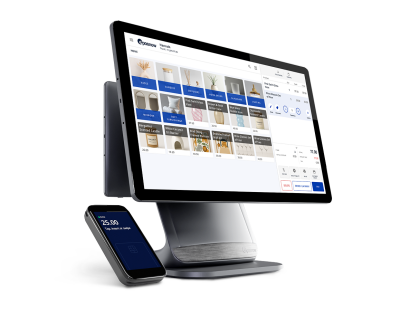
If someone uses “EFTPOS machine” in a sentence, they’re referring to the physical card payment terminal customers use to pay for goods or services electronically. In practical terms, that means the device that sits on a counter, is handed to a customer at the table, or travels with a business on the move to process secure card payments.
If you're still wondering "What is EFTPOS?": physically, EFTPOS machines usually include a screen, keypad or touchscreen, built-in card reading technology, contactless tap point, receipt printer (on some models), and connectivity hardware and/ore software such as Wi-Fi, Bluetooth, Ethernet, or SIM-card capability. Depending on the model, an EFTPOS terminal may be fixed to a till point or used wirelessly around a venue.
These devices first emerged in the 1980s, when electronic payment terminals became commercially viable, and became far more widespread through the 2000s as chip-and-PIN and contactless payments became standard and most businesses had one. Today, they’re a core part of how most customer-facing businesses trade, from independent cafés to multi-site retailers.
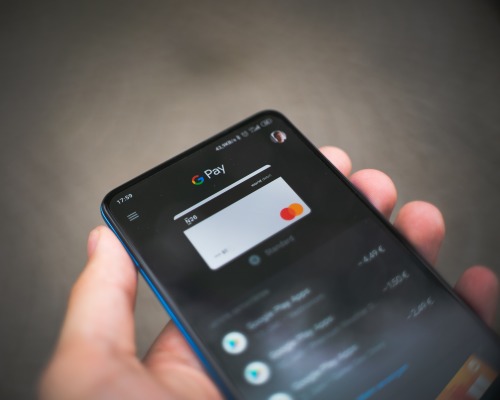
Modern EFTPOS machines accept a wide range of payment methods, including chip and PIN cards, contactless debit and credit cards, and mobile wallets such as Apple Pay and Google Pay. Many models can also support card-not-present or phone/customer-not-present payments, giving businesses in all industries more flexibility in how they serve an increasingly cashless customer base. This is essential with many among younger generations not even carrying cash with them!
Many EFTPOS devices will connect directly to an EPOS or POS system, allowing the sale total to be sent automatically from the till to the card terminal. This removes the need for staff to key in amounts manually, reducing human error, speeding up checkout, and improving reporting accuracy. Once the payment is authorised, the POS system can instantly update the sale record, stock count, and end-of-day reports.
However, not every business wants or benefits from integration with a POS system. Many EFTPOS machines can operate in standalone mode, meaning they can process payments independently without a till connection, with a keyed in sales figure triggering the device into action. Others are fully integrated, linking directly with well adapted systems, such as Epos Now Payments linking with Epos Now POS systems. Businesses with higher transaction volumes often benefit most from integrated setups, while smaller or mobile traders may prefer the flexibility of standalone terminals. Whichever suits your business better, it's important to ensure a device you purchase will operate as required.
What does EFTPOS look like?
An EFTPOS can take two main forms. The more traditional hardware appears bulkier but can perform more complex tasks while functioning in “standalone mode” as well as connected to an EPOS device.
The traditional EFTPOS can take payments for a business by itself by contactless payment, a swipe of a card, or by card insertion. It can tally the totals of all payments and print z-read reports.
It can also perform refunds and serve customers even when they aren’t present or do not have the cards with them. The Epos Now Link adheres to this more traditional style.
In recent years, a second, simpler EFTPOS device has emerged. These devices don’t always work without an EPOS system connected to them, and settings changes often need to be made via the EPOS.
However, the smaller EFTPOS’ have become popular thanks to their practicality, portability, and slick, modern appearance which many businesses and consumers prefer to their bulkier counterparts.
How does EFTPOS work?
EFTPOS transactions follow a fairly standardised process with a series of steps being followed to complete each transfer of funds. Furthermore, each transfer incurs a series of expenses that the banks and the vendor must pay.
The card provider usually deducts these fees from the transaction itself. Consequently, many card machine deals involve a percentage of each transaction being transferred to the provider themselves.
 The process is different for various kinds of cards and accounts, so some card payments cost more than others (although Epos Now Payments blend these fees together so businesses always know how much they’re paying).
During payment processing, EFTPOS systems follow a series of steps:
- When a card is presented, the device encrypts and sends card and transaction data to the bank. This confirms that the account is authentic, the PIN is valid (if used) and funds are present and therefore the transaction is authorised to take place.
- The release of funds allows a transfer from the payment processor to the merchant account. This is an account where capital is stored on behalf of the business.
- At this point, the transaction is marked as complete and both business and customer can get on with their day.
- After the transaction, the customer’s bank will pay what is owed to the payment processor, and the money will be released to the business, transferring it from the merchant account to the business account[3].
Card machines use several different methods to calculate transaction pricing, some of which will work better for different kinds of businesses. As you can see above, this process is automatic, and managers only need to monitor transaction reports to stay on top of card payments.
This means a portion of every sale gets redirected out of the business. Nevertheless, EFTPOS works for businesses because the convenience and speed at which transactions can be completed help boost trade and reduce administrative fees.
Benefits of EFTPOS for Businesses
For most modern businesses, EFTPOS is about far more than simply accepting card payments. It's about creating a smooth checkout that provides convenient payment otions for customers, while providing the customer with security and business with visibility during sales!
- Faster transactions and shorter queues. EFTPOS payments are typically much quicker than handling cash, especially with contactless cards and mobile wallets. Faster checkout times help reduce queues, improve customer satisfaction, and allow staff to serve more customers during busy periods.
- Reduced theft and cash-handling risk. Taking more payments electronically means more money protected by digital payment security and less physical cash on-site. This helps reduce the risks associated with theft, human error, counterfeit notes, while also lowering the time spent banking cash takings and investigating end-of-day cash discrepancies.
- Automatic record keeping and easier reconciliation. Every EFTPOS transaction is automatically logged, making it far easier to reconcile daily sales, track payment types, and manage your business accounts and cashflow. This reduces the time and energy you spend on admin, as well as providing a clearer audit trail for your accountant!
- Meets customer payment expectations. Today’s shoppers expect card payments to be an option. In the UK, 59% of consumers say their preferred in-person payment method is a debit card, credit card, or mobile wallet, showing just how important digital payments have become to the customer experience. Ignore EFTPOS and you're ignoring your customers.
- Full sales visibility through POS integration. When EFTPOS is integrated with a POS platform, payment data flows from your payments device directly into sales reports, stock tracking, and end-of-day summaries. This gives businesses a complete view of performance and helps managers make better decisions based on accurate, real-time data.
Other terms used to describe EFTPOS
You’ll likely encounter terms like PDQ machine (process data quickly) and POS (point of sale) being used in similar ways. POS or EPOS (electronic point of sale) sometimes gets used when referring to card machines despite POS tills also being the software and hardware that holds business data and calculates sales (which connects or integrates with the card machine taking the funds).
What does EFTPOS mean in the UK?
In practical UK usage, EFTPOS most commonly means chip-and-PIN and contactless card payments made through card terminals. Contactless has become the dominant form of in-person card payment, with UK Finance reporting that it now accounts for 76% of all debit card transactions and 67% of all credit card transactions in the UK. This makes tap-to-pay the most familiar everyday example of EFTPOS for UK shoppers, which is great for businesses as tap-to-pay cuts time at checkout radically, helping them bust queues!
Unlike Australia, the UK does not have a domestic “EFTPOS” card brand or network. Instead, most EFTPOS-style card payments run through global card schemes such as Visa and Mastercard, which process the vast majority of debit and credit card transactions accepted by UK businesses. This means that while the term EFTPOS is understood, UK merchants and consumers are usually talking about standard card terminal payments over Visa and Mastercard rails.
Can EFTPOS be used online?
Ecommerce has given rise to many different modes of payment that different internet companies use to process transactions. However, EFTPOS is not one of them.
EFTPOS, you may recall, has “point of sale” within its name, which in this instance refers to a physical place where a transaction takes place. EFTPOS can take payments over the phone, can be mobile (which many businesses require), but cannot be virtual.
Frequently asked questions
- What does EFTPOS stand for?
-
EFTPOS stands for electronic funds transfer at point of sale, but it refers to a credit card machine that allows businesses to take card payments at their checkout (or payments from ewallets and watches).
- What is an EFTPOS machine called in the UK?
-
In the UK, an EFTPOS machine is typically referred to as a card machine, card reader, or (less frequently, these days) PDQ machine, which stands for “process data quickly”. While EFTPOS is widely recognised, especially internationally, UK businesses are more likely to refer to the device by one of the above terms when discussing card payment terminals.
- What is the difference between EFTPOS and a debit card?
-
EFTPOS is the payment system and technology used by businesses to transfer money electronically at the point of sale from a credit or debit card to a business account. The debit card is the small card with a chip containing the account information of the owner. These cards can now be represented digitally on phones or watches, too!
- What is the difference between EFTPOS and POS?
-
POS means point of sale, which usually refers to the till with all the business data like products and pricing. But POS can refer to all the software and hardware that processes sales and collects and stores business data. This includes EFTPOS, which is the device used to take card payments. When integrated, the EFTPOS machine communicates directly with the POS system to sync totals, reports, and sales records automatically.
- How much does an EFTPOS machine cost?
-
There are a range of fees associated with EFTPOS machines. These can be broken down into hardware fees, rental, and transaction fees. The provider usually takes a percentage of each sale you make on the device, and so the transaction fee will typically be the biggest expense to the business. Therefore, prioritising a low transaction fee is often the simplest way to approach your search. However, it's important to consider all costs when choosing your provider!
- Can EFTPOS be used for online payments?
-
Not typically. You may be able to find providers that include a virtual payment terminal with a card device, but these are separate services. EFTPOS is a combination of hardware and software designed for physical sales processing, while ecommerce sales rely on online software.
Find out how your business could benefit from an EPOS trusted by over 40,000 businesses worldwide.