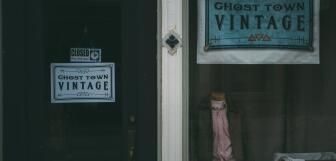
Starting an Online Thrift Store: Top 10 Tips



Considering that the global secondhand apparel market is now on track to reach $367 billion by 2029, growing 2.7 times faster than the broader apparel industry, it's clear there's no better place than thrift stores to get more for your money. And that goes for store owners too, not just the customers walking away with a bargain.
While many find the concept of owning a profitable thrift store bizarre, these stores actually allow for extremely low-cost margins, which work to ultimately maximize your profits, so it's really a win-win.
As more shoppers move their spending online, many thrift entrepreneurs are choosing to sell through existing platforms rather than build their own online store, and given how many thriving thrift shops are already out there, it's easy to see why. But success doesn't have to be second-hand. Starting your own online thrift store can absolutely make sense too, with just a few simple steps.
What is an online thrift store?
Simply put, a thrift store is an outlet for pre-loved goods and clothing. Ranging widely from charity shops to vintage boutiques, these various thrift store setups do have one uniting factor: they sell pre-owned items at discounted prices, compared with retail outlets and department stores.
It's not difficult to see the appeal of cheap, quality items at a fraction of their original cost. However, while the value proposition might be simple, starting a thrift store is far from straightforward. If you find formulating a plan problematic, don't worry, we've put together a list of 10 top tips to get you going in the right direction:
Research the online thrift market
As with any retail venture, research is key. You may have a great idea for starting an online thrift store, but you should always do your due diligence. Since your store will be located solely online, you'll now be competing globally for customers. Understanding what e-tailing actually involves is a good starting point if you're new to selling purely online.
From a customer's viewpoint, look at what your online competitors are doing and how they're performing. Work out what's working for them, and where there's room for you to offer something better or different. You'll also want to research your target market to understand their buying habits and preferences, what draws them in, what puts them off, and what they'd actually pay for. Put together, this gives you a much clearer picture of how to shape your own store from day one, rather than guessing and adjusting later.
Find your niche
As with starting any business online, it's important to identify your niche. Since customers have access to a world of online thrift stores at their fingertips, it's crucial to identify where you can offer something unique and/or superior to other retailers in the same space.
This might be through sourcing and stocking a particularly unique range of products, or by specializing in certain types of items (vintage clothing, for example). You could also focus on a specific demographic, such as young adults or retirees. It's worth knowing the scale involved too: the National Association of Resale and Thrift Shops (NARTS) reports the average US thrift store earns around $300,000 in revenue per year, so this isn't just a hobby business for those who get the niche and pricing right.
It's worth looking at how POS systems built for clothing retailers handle this kind of specialization, since the right setup can make managing a niche stock range far easier.
Create a brand identity
A thrift store is only as good as its reputation and this starts with your online branding. You'll want to create a strong branding strategy and develop a logo that is recognizable and appealing to stand out amongst your competition in customers' minds.
Your website design should mirror your brand identity, the layout and style should be eye-catching but not too busy, as well as easy for users to navigate. The tone of voice you choose for your social media posts, emails and blog content, is also important, it should be consistent with your brand identity.
Since starting an online thrift store is often a relatively low investment venture, you might be pleased to know that there's a wide range of free online tools like Wix and Canva, which can help you create a professional logo and website design. Our guide on how to create an online store, including platforms, tips and tools, covers this in more depth.
Set up your thrift shop
There are three main options for setting up: you can create your own website, use an existing online marketplace (like Poshmark, eBay, or ThredUp) or set up shop on social media platforms. Each of these has its own advantages and disadvantages:
- Creating a website will give you more control over the look and feel of your store, but it can be more time-consuming and expensive to make and maintain.
- Using an online marketplace is a good option if you're starting out, as they provide all of the necessary infrastructure and support, but you'll be competing with other retailers on their platform.
- Setting up shop on social media platforms is free and easy to do, but you'll be limited by social media algorithms, which can make it harder for customers to find your page.
Most people starting out are better off using an established online marketplace. The built-in customer base and selling tools let you test what sells before investing time and money into something more customized. Once you've proven there's demand for your products and built a steady customer base, that's a good time to consider launching your own website, at which point a website builder that connects directly to your POS can take a lot of the manual overlap out of the equation, and integrating with a platform like Shopify means your online and in-person stock stay in sync automatically.
Source your stock
Once you've decided on your business model, it's time to start stocking your store. The big question: do you source and hold your own stock, or let other sellers list their own items through your site?
For most people starting out, sourcing your own stock is the smarter route: full control over quality and presentation, no waiting on other sellers. Thrift stores, garage sales, and estate sales are the classic starting points, and wholesale liquidation pallets can help you scale once you've outgrown one-off finds. Our guide on how to buy wholesale covers what to look for so you don't overpay for stock you can't move.
Sort out your storage system
It's important to have a good storage system in place for easy inventory management. If you have a lot of stock, it can be helpful to sort it into categories like size, color or style, so that you know exactly where everything is when customers ask about specific items. You should also make sure that you have enough space to store it all safely and securely, ideally in a dedicated room or spare bedroom.
As your store starts to grow, you'll quickly realize that business organization is key. Organizing your stock will help streamline the packing and delivery process and keep track of what's been sold and what needs to be restocked. A retail POS system makes this far easier to manage as your inventory grows, since stock levels update automatically as items sell.
Perfect your pictures
One of the most important aspects of an online store is the quality of its product photos. So when you're starting out, it's a good idea to take high-quality photos yourself. This helps build trust with your customer base by giving people a clear vision of what they're purchasing. Since many vintage pieces come with imperfections, it's worth capturing multiple angles, including any flaws, so buyers know exactly what they're getting. Ideally, take photos of your products both on and off your models.
Price your products
Improper pricing strategies can see your profits going off the rails. If you're too expensive, customers will be less likely to buy from you; but if you're too cheap, then you might not make as much profit as you'd like. Check what similar pieces are selling for on the platform you're using, condition, brand, and rarity all matter more than age alone. For genuinely rare or sought-after vintage pieces, it's worth checking recent sold listings (not just asking prices) on sites like eBay or Poshmark, since asking prices are often inflated compared to what items actually sell for.
Sort out your shipping and delivery
Depending on how much stock you have, starting an online thrift store might mean that a large proportion of what you sell will be sent via a shipping carrier like USPS, UPS, or FedEx. In this instance, it's important to have a solid shipping policy in place, outlining how much you charge for postage and how long it will take for products to arrive.
When starting out, it's a good idea to set up your store with free shipping and/or provide tracking information for customers who are worried about their order arriving safely, to encourage sales and build brand loyalty.
Promote your online thrift store
No matter how great your products and branding might be, you won't make any sales if no one knows about your store. Although starting an online thrift store is relatively low cost, you might choose to set aside some budget for paid ads on social media platforms and Google.
These are a great way of reaching your target audience with ease and getting them to click through to your site or social media page. You can also promote yourself through social media; hosting competitions and giveaways across your accounts creates a buzz around your new business.
Keeping up with one-of-a-kind stock
Since every item in a thrift store is one-of-a-kind, tracking individual stock matters more here than in standard retail, and Epos Now's POS systems help make this easy by handling everything from one cloud-based system. If you're not sure where to start, our complete guide to what a POS system actually is and how to actually use one day-to-day are a good place to begin.
Frequently Asked Questions
- How much does it cost to start an online thrift store?
-
It's one of the lower-cost ways to start a retail business, since sourcing second-hand inventory can be much cheaper than buying new wholesale stock. Your main costs are typically the inventory itself, which you can source from thrift stores, flea markets, estate sales, and similar sources, along with basic photography equipment and either marketplace listing fees or a simple website. Many sellers start with just a few hundred dollars' worth of inventory and scale from there.
- Do I need a license to sell secondhand clothing in the US?
-
Generally, no specific license is required to sell secondhand clothing itself. You will need to register your business (a sole proprietorship is the simplest and cheapest option for most sellers) and obtain a sales tax permit to collect and remit sales tax where required. Be aware that requirements vary by state, so it's super important to check your local rules before moving forward.
- Should I sell on my own website or an existing marketplace first?
-
Most people starting out do best on an existing marketplace; sites like Poshmark, eBay, or ThredUp give you a built-in customer base and infrastructure that let you test what sells before investing time and money into something more custom. Once you've got a steady stream of customers, that's your cue to think about building your own site (but it's still not obligatory).
- How do I price secondhand and vintage items fairly?
-
Check what similar pieces are selling for on the platform you're using. Condition, brand, and rarity all tend to matter more than age alone; a beat-up jacket from the 90s won't fetch as much as a pristine one from a sought-after label. And if you're dealing with something genuinely rare or sought-after, don't just look at asking prices; check what similar items have actually sold for recently. Keep in mind that asking prices are often wishful thinking, whereas recent sold listings tell the actual truth.
- What's the biggest mistake new thrift store owners make?
-
Stocking too broadly without a clear niche is probably the most common trap. It's tempting to want to appeal to everyone, but in practice that usually means standing out to no one. Picking a specific focus, whether that's an era, a style, or a particular customer, makes it far easier to build a recognizable brand and a loyal customer base who know exactly what to expect from you.