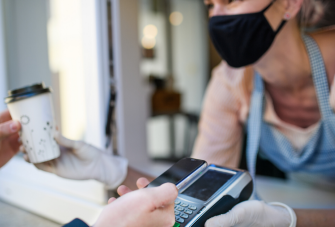
What Is a Portable POS System?



You might have noticed that you're suddenly paying less and less frequently at the counter. Increasingly, it’s becoming common practice to serve clientele at the table, in the middle of the shop, in a queue, or even at a festival in the middle of nowhere. This is all the work of portable POS systems.
Portable POS systems are having quite a moment and have become one of the fastest-growing corners of the payments industry. In fact, the mobile and portable POS segment is projected to grow at a 9.38% CAGR through 2031, comfortably outpacing traditional fixed systems. As checkout moves off the counter, more and more businesses are switching to devices that go wherever the sale happens. For many businesses, this has given rise to more sales opportunities, as well as happier customers.
If you’re looking to change up your current setup, or you're looking for a system to get started with, you’ve come to the right place. Let’s dive right into the big questions: what exactly is a portable POS system, and how does it fit into what you’ve already got going on?
What is a portable POS system?
A portable POS (point of sale) system is almost exactly what it sounds like. Essentially, it’s a wireless device that lets you take payments and manage sales away from a fixed checkout counter. For your business, this means more flexibility and shorter queues, and for your customers, this means no more standing around, because instead of customers coming to the till, the till comes to them.
Portable POS systems typically combine a card reader, screen, and core POS software, either built into a single handheld device, or split across a card reader that pairs with a smartphone or tablet via Bluetooth. This means staff can carry out sales, take contactless and chip payments, and print or email receipts from virtually anywhere. This also means that instead of just one till per establishment, there can be as many checkouts as staff members carrying a device, all working from the same back office at once.
For further information on POS systems and how they fit into the bigger picture, why not check out our complete guide: What is a POS system?
How does a portable POS system work?
While the exact way that a POS system works will depend on the brand or type you’ve opted for, in general, POS systems are intuitive and straightforward to use. Here are the steps broken down:
-
Step 1: Staff bring the device to the customer, wherever they are.
-
Step 2: The item or order is entered into the POS software. This can be done either via scanning a barcode, selecting from a menu, or making a manual addition.
-
Step 3: The customer pays by tapping their card, phone, or watch, or by inserting a chip card. The built-in card reader processes the payment securely over Wi-Fi, 4G, or Bluetooth.
-
Step 4: A receipt is generated, and the sale is logged in your back office in real time.
Because staff can bring the whole transaction to the customer, there's zero walking back and forth to a fixed terminal. This means there's little to no delay, and the sale and payment complete fast and uninterrupted. With a portable POS system, the sale is done and dusted, just like that.
Types of portable POS systems
While most POS systems are similar, they’re not quite the same. Some fit right in your pocket, others pair with a tablet, and a few need no extra hardware at all. The right choice comes down to what actually suits how your business runs day to day. Here are a few popular examples:
Handheld terminals
These are dedicated, all-in-one devices built specifically for mobile payments. They combine a screen, card reader, and often a built-in receipt printer into a single piece of hardware. You see these most often in retail stores and restaurants as they’re designed for more complex transactions and can survive a full shift of use. While reliable and generally tried and tested, handheld devices come with a higher upfront cost, extra hardware to charge and manage, and more features than a more casual seller may actually need.
Tablet-based POS systems
These pair a tablet (often an iPad or Android tablet) with a separate card reader that connects via Bluetooth. This setup tends to offer a larger screen for staff, which can make managing more complex orders easier. Tablet-based POS systems do require staff to carry around two devices instead of one, which is worth taking into consideration.
Smartphone card readers
These are small card readers that connect to a staff member's own smartphone via Bluetooth, turning the phone itself into a payment terminal. While the phone runs the app and shows the screen, the reader is what actually reads the card or accepts the tap. But here’s the catch: lose or forget the reader, and you can’t take payments. Overall, this is an excellent low-cost entry point for very small businesses, market traders, and pop-ups.
Tap to Pay on phone
This is the newest category, and involves no separate card reader at all. Recent iPhones and Android devices with NFC can accept contactless payments directly, using nothing but the phone itself and a supporting payment app. While super convenient, with a low barrier to entry, Tap to Pay only works on newer, NFC-enabled phones and relies entirely on the staff member’s own phone battery and signal. This means that this system tends to hold up less well under heavy, all-day use.
Benefits of a portable POS system for businesses and customers
So you’re probably wondering, why bother with a portable POS system at all? Portable POS systems offer real, practical advantages not only for the business, but for the customers themselves. Here are a few ways you can expect to benefit from implementing a portable POS system.
-
Faster service: Orders and payments can be taken at the table or on the shop floor, cutting out the walk to a fixed till and speeding up the whole transaction.
-
Shorter queues: Staff can serve customers wherever, rather than funnelling everyone to a single checkout point, which is especially valuable during busy periods or events. This also means you don’t have queues of people loitering in the middle of your establishment.
-
Flexibility for different environments: Portable POS systems work well just about anywhere, since they don't rely on fixed power or an internet connection.
-
Better customer experience: Provide your customers with a smoother impression of the service by accepting payment on the spot, in seconds.
-
Real-time reporting: Because sales are logged the moment they happen, business owners get accurate, up-to-date sales reporting without waiting for an end-of-day reconciliation.
How much does a portable POS system cost?
Excellent question, and there’s good news. Getting started with a portable POS system is often more affordable than you would expect, and is accessible to businesses and sole traders alike. Costs usually come down to two things:
-
Hardware: You can get started with a basic Bluetooth card reader for as little as £20 to £50. If you want a more comprehensive setup, including a handheld terminal with a built-in printer and screen, costs vary from £150 to £400.
-
Transaction fees: Most providers take a percentage per transaction, usually somewhere between 1.5% and 2.75%, rather than a big upfront bill. So your costs move with your sales, not against them.
Keep in mind that some providers charge a monthly fee for the fancier back-office features, like inventory tracking and detailed reporting, so make sure to do some research before committing. If you're just starting out, or are operating on an ad-hoc basis, you might not need these extras straight away, and could get by perfectly well with a basic setup until your business grows into needing them.
How to choose a portable POS system for your business
Here's a quick checklist to help you pick the right one:
-
Battery life: If you expect to be taking payments all day, you'll need a device that can comfortably last a full working day without needing to be recharged.
-
Connectivity options: Check whether it supports Wi-Fi, 4G, or both, particularly important if you'll be using it somewhere without reliable Wi-Fi.
-
Payment flexibility: Look beyond standard card and contactless payments and consider whether the system supports the other ways your customers might want to pay, such as gift cards, payment links, or QR code payments.
-
Durability: If you're using it outdoors or in a fast-paced environment, look for a device built to handle such conditions. If you’re expecting a fair amount of drops, spills, and heavy use, Tap to Pay or smartphone card readers may not be the ideal choice for you.
-
Integration with your existing POS software: Ideally, your portable device should sync with the same back office as your main till. Keeping sales, stock, and reporting in the same place will save you the hassle of reconciling everything separately. If you already use a POS provider, it's worth checking whether they offer a portable or mobile option first, since staying within one ecosystem is usually the simplest option.
Portable POS systems from Epos Now
If you’re looking for a mobile POS system, Epos Now is a great place to start. Here are the portable POS systems that you can use to get your business on the move:
Air is Epos Now's lightweight, pocket-sized card reader, weighing just 170g. It pairs with your existing phone, tablet, or countertop terminal, making it ideal for staff who need to take payments on the move without carrying extra bulk.
Pro+ goes a step further, combining a card reader and a full POS system into one all-in-one handheld device. It can run an entire sale independently, from taking the order to processing payment, making it a popular choice for mobile and pop-up businesses that want to work completely free of a fixed counter.
Every portable device syncs directly with your main Epos Now back office, so sales, stock, and reporting all update in real time, whether the payment happens at a fixed till or out on the dancefloor. Devices support contactless, chip, and digital wallet payments including Apple Pay and Google Pay, and are built to handle a full day's use, so you’re never left stranded.
If you're weighing up which portable POS system suits your business, our payment processing solutions page has more detail on the specific devices available.
- Are portable POS systems and mobile POS systems the same?
-
The terms are often used interchangeably, but "portable" usually refers to physically moving a device around a fixed premises (like taking orders at a restaurant table), while "mobile" more often describes taking payments entirely off-site, such as to a festival or a market stall. Most modern devices are capable of both.
- Do I need Wi-Fi to use a portable POS system?
-
Not necessarily. Many portable POS systems support 4G as well as Wi-Fi, and some can even store transactions offline and process them once a connection is restored. If you expect temporary or patchy service, there are still systems that allow payments to go through.
- Can I use a portable POS system alongside my existing till?
-
You can, but you don't have to. Most portable POS systems are designed to sync with a fixed till if you already have one. That said, a portable device can also run entirely on its own; plenty of businesses use one as their only checkout, with no fixed till at all.
- Is a portable POS system secure?
-
Yes. Portable POS systems use the same encryption and tokenisation technology as fixed terminals, meaning card details are never transmitted in a readable form, whether the payment is taken at a counter or on the move.
- How long does a portable POS device's battery last?
-
This varies by device, but most handheld terminals are built to last a full working shift, roughly 8 hours, on a single charge. Certain lighter smartphone-based readers often last even longer since they draw less power.