How Many Employees Do I Need in My Restaurant?



Staff costs are undoubtedly one of the most significant overheads for any restaurant. So, if you want to minimize costs as much as possible, it’s worth asking yourself how many members of staff do you need in your venue? And how should you manage your team?
Sadly, there is no one size fits all answer to this important question. Indeed, there are many factors to evaluate when determining how many staff are needed to run your restaurant.
Achieving the perfect staffing balance is a never-ending battle that requires constant monitoring and frequent adjustments. There’s a fine line between being overstaffed - which can negatively impact cash flow - and employing the right number of heads to deliver successful service and customer satisfaction.
Finding equilibrium in your staffing levels is critical to achieving sustainable commercial success in any hospitality business.
How many staff does a restaurant need: hard numbers
One thing to remember when trying to calculate restaurant staffing is that every restaurant is different. The number of staff you need will vary depending on your service style, location, size and restaurant type.
Self-service restaurant: Staff demands are lower in this format, and increasingly so where self-ordering kiosks are used. In recent years, kiosk adoption has become standard practice in quick-service formats, often reducing the number of staff needed purely for order-taking. Where kiosks are in place, expect FOH ratios of 1 staff member per 12–15+ tables. Restaurants without kiosks should still budget closer to the traditional 1 per 12 tables. Typical staff demands might require:
- Back of the house (BOH - Kitchen/Cook staff) - 4 staff members in a shift for every 50 customers an hour.
Seated casual dining restaurant: Customers will expect higher levels of service at these types of casual restaurants. As a result, you will need more staff per customer to make sure you are keeping up with orders, cleaning, and delivering customer satisfaction. General staff requirements might be:
- Front of the house (FOH - Service/Servers) - 1 staff member, per shift for every 5–6 tables.
- Back of the house (BOH - Kitchen/Cook staff) - 4 staff members for 50–60 cover restaurants, per shift.
- Supporting Staff (admin, accountant, HR) - 1–2 staff members, (cashier staff and cleaners) - 1 & 2 respectively per shift.
Fine dining restaurant: Fine dining restaurant businesses require far more attentive service levels and, therefore, will generally need higher numbers of front-of-house and back-of-house staff to achieve this. General staff requirements may look like:
- Front of the house (FOH - Service/servers) - 1 staff member, per shift for every 4 tables.
- Maitre d’ - 1 staff member per shift.
- Back of the house (BOH - Kitchen/cook staff) - 6 staff members, per shift, for 50–60 restaurant covers.
- Supporting Staff (admin, manager, accountant, HR) - 1–2 staff, (cashier and cleaners) - 1 & 2 respectively per shift.
Of course, these numbers are only a baseline and will vary depending on venue location and menu type.
Find the perfect POS to help you run your restaurant business! Choose from a wide selection of hardware and software options for technology that will help drive you to the top!
- Manage cross-channel products and inventory on a streamlined sales system and view transaction reports on-site or off using cloud technology
- Increase security and simplify sales for new starters with staff access controls and multiple access levels for a system that suits your needs
- Make better business decisions using hundreds of downloadable reports and integrations with the best industry software for accounting, marketing, online ordering and more
Remember employee satisfaction
It’s important to remember that not only do you want your customers to walk away happy, but you also want your employees to be satisfied as well.
Providing your members of staff with a positive work environment and culture will require rostering enough staff in a shift to ensure no one is overworked, and that the job isn’t unnecessarily stressful. If you're wondering how to recruit restaurant staff, creating a happy workplace is a great way to start! With this in mind, it’s sometimes beneficial to overestimate staffing needs - this can also be beneficial when it comes to dealing with potential emergencies or staffing shortfalls.
Having a number of part-time employees can also help boost morale for restaurant employees, as this can increase flexibility and reduce pressure on the team. Part-time or flexible contracts can make shift-swapping and scheduling easier, allowing employees to easily pursue out-of-work opportunities.
Staff roles you need to fill in a restaurant
Depending on the type of restaurant you are opening, staffing needs will vary. Your restaurant may need managers, servers, cooks, dishwashers, and hosts. In newer or smaller enterprises, some of these roles may cross over, and servers can double as dishwashers in quiet times while managers might be hosts. Because of this, it is important to hire people who are willing to be flexible in their roles.
 Manager
The most important role in a restaurant is the manager. Some business owners will take on management responsibilities themselves, while others will choose to hire an experienced person to handle the day-to-day operations.
The best candidates for this position will have experience in managing the same style of restaurant and will be familiar with suppliers, local sources, customer relations, and methods.
Not only should a manager be able to open and close the restaurant, complete stock ordering, track inventory, but they must also be able to train and manage staff, develop a marketing plan, deal with suppliers, and maintain a friendly relationship with all customers (which includes complaints management). Choose a candidate that directly reflects your style and brand image.
Chefs
Depending on your restaurant, the head or executive chef may be your main attraction. Top chefs can create their own menu and culinary masterpieces that can potentially make or break your restaurant. It’s therefore crucial to hire a chef that fits your restaurant style and who can represent your brand and develop your restaurant’s reputation.
Cooks
When it comes to hiring cooks, sous chefs or line cooks it’s best to do so according to your restaurant type. Cooks can work under chefs, or can run the back-of-house solo. Customers will likely become regulars if they know exactly what to expect when they dine at your establishment, and excellent cooks can provide this.
Dishwashers
Quite simply, dishwashers will clean dishes and serveware in your venue. These kinds of positions are always well suited to juniors just starting out in the workforce, and because of age, will generally be cheaper to employ. Labor costs for dishwashers and junior kitchen assistants are not always justified for smaller businesses, as these tasks can be carried out by other front or back-of-house staff.
Serving Staff
Your serving staff are another vital component of your restaurant. Servers are the members of staff who interact with customers, so they need to be tidy, have a good attitude and communication skills, and be able to provide a high level of customer service.
They also need to be able to work well under pressure and be able to meet the demands of several customers at different times, all while maintaining a positive attitude even when things go wrong at the table.
Other roles
Dedicated bus persons can be useful by clearing and setting tables, polishing silverware and refilling glasses, freeing the waiters to engage and attend to diners directly.
Restaurant hosts are common in high-end restaurants as they provide an outstanding first impression, taking reservations, seating customers and then finalizing bills after the meal.
Bartenders are common in the restaurant industry, making the best drinks and optimizing wet sales for the business while maintaining the bar to the highest standard.
TIP: Check out our full list of restaurant staff positions in our complete guide.
Make work easier for your restaurant staff
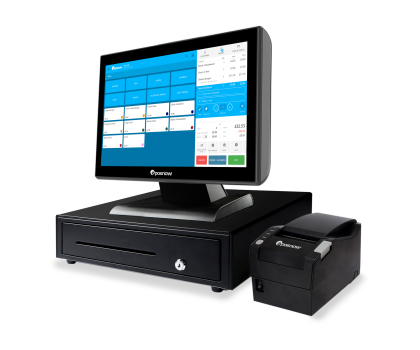
Few things can simplify running a restaurant more than a top-of-the-range POS system. Epos Now solutions provide bespoke hardware and software options for your business for a flexible, all-in-one transaction system.
- Integrate card payments, streamline product selection with organized, coded products and categories, and provide servers with product information during transactions
- Manage your restaurant from anywhere with cloud technology, ensuring you’re never out of touch with your business
- Create a co-ordinated system by integrating marketing, accounting, product management, loyalty software and much more into one simple office application
- Run your business your way with hundreds of fantastic business apps to choose from
To find out more about Epos Now solutions, submit your details below and speak to a member of our expert team.
Frequently asked questions
- How many servers per table do I need?
-
Most full-service restaurants aim for 1 server per 4–5 tables, dropping to 1 per 3 tables in fine dining for more attentive service. Self-service and kiosk ordering venues can stretch to 1 staff member per 12 tables. Adjust based on menu complexity, table turn times, and whether bussers or runners support your servers.
- How many kitchen staff per 100 covers?
-
Benchmarks vary by concept: casual dining runs roughly 4 BOH staff per 50 customers per hour, while fine dining needs closer to 6 BOH staff per 50 customers per hour. Scaled to 100 covers, that's roughly 8–12 kitchen staff, though menu complexity and prep intensity will shift this significantly.
- What is the 30/30/30 rule and how does it work for restaurants?
-
The 30/30/30 rule is a budgeting framework allocating 30% of revenue to food costs, 30% to labor costs and 30% to operating costs, leaving a 10% profit margin. It's used to benchmark whether staffing levels and wages are proportionate to sales, flagging when labor spend is running too high.
- What is the formula for calculating staffing needs?
-
There's no single universal formula, but a practical approach is: divide expected covers by your target covers-per-staff-member ratio for each role (FOH, BOH, support), then adjust for shift length, peak-hour demand, and service style. Many operators also track labor cost as a percentage of revenue (total labor costs ÷ total revenue × 100) alongside headcount.
- What is a good management to staff ratio?
-
A common benchmark is one manager for every 15 employees, though tighter ratios of 1:10–15 are typical for restaurants specifically. The right ratio depends on shift complexity, venue size, and how much scheduling or training support managers provide beyond basic supervision.
Choose a POS trusted by 40,000 businesses and the very best restaurants