What Are the Best End-of-Year Reports for Small Businesses?



The finish line is in sight: another year of running your business is nearly over. No doubt you’ve been working hard, serving customers, managing staff, ordering inventory and dealing with all of the unexpected expenses and emergencies that inevitably come your way. You’ve probably had little time to sit down and really think about how the year has panned out.
But take a beat. Before you jump straight into planning for next year, it’s worth checking more than just how much money came through the register. You’ll likely want to know which products made you the most money, and whether your busiest months were actually your most profitable. That’s where your end-of-year reports come in. With their help, you can understand what worked, what didn’t and how you can do even better in the new year.
In this blog, we’ll walk you through the reports that are worth a closer look and exactly how each one can help your business. So, log in to your POS, pull up the year’s numbers and let’s dive in!
What are end-of-year reports, and does every business need them?
If you’ve just finished your first year in business, you might be wondering what end-of-year reports actually are, how many you need and whether they’re something you should even be worrying about yet. The good news is that they’re not as complicated as they sound. They’re simply a way of looking back at your business’s performance over the year, from how much you’ve sold and spent to which products have been flying off the shelves (and which haven’t).
So, who needs end-of-year reports? You don’t need to be running a big company to find them useful. Whether you’re a sole proprietor, running a little coffee shop, managing a busy restaurant or overseeing several retail locations, knowing your numbers helps you avoid avoidable (and expensive) mistakes.
What’s even better is that there’s no set number of reports you need to prepare. You could look at just one, like your sales report, or work through a handful, depending on how much time you’ve got and what you want to find out. That said, each report shows you a different part of your business, so the more you look at, the clearer the picture gets, and the easier it is to make decisions.
And those decisions really matter. According to the Federal Reserve’s Small Business Credit Survey, 94% of small employer firms faced at least one financial challenge in 2025, from rising costs to uneven cash flow. The better you understand what’s coming in, what’s going out and when, the easier it is to plan ahead and stay one step ahead of those challenges.
Where to find your reports
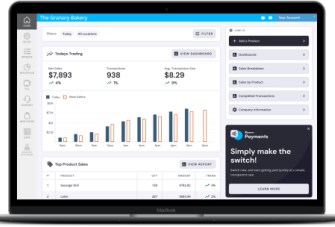
Luckily, you probably already have more useful information than you realize. Anything to do with sales, products, inventory, staff and promotions comes straight from your POS. With Epos Now, you can pull these up in your Back Office in a few clicks, and our guide to the 8 most useful reports you can generate in Epos Now shows you how. The bigger-picture financial reports, like your profit and loss, cash flow and tax records, usually come from your accounting software or your accountant, as they need things your POS doesn’t know about, like rent, wages and bills. Epos Now integrates with popular accounting software like QuickBooks, Xero and Sage, so your sales can sync straight into your books, and you don’t need to spend ages tracking everything down.
Sales reports: Where did your money come from?
Your sales report is probably the most obvious place to start. It shows how much revenue you’ve brought in throughout the year, but there’s a lot more to learn than just the final figure. For example, which months were your busiest? Did your summer promotion actually increase sales? Were there particular days when business was consistently slow? And did customers spend more per visit this year than last year?
Let’s say you run a café and notice that Saturday mornings bring in twice as much revenue as weekday afternoons. That’s useful information when you’re planning staff schedules, deciding when to run promotions or working out how much inventory to order.
If you’ve been in business for more than a year, it’s also worth comparing this year’s figures with last year’s. You might discover that sales have grown overall, but certain months are performing worse than before. But what if this is your first year in business? Don’t sweat it: your monthly figures will still give you a useful starting point for future comparisons.
Keep in mind that the important thing isn’t just knowing whether sales went up or down. It’s understanding what caused those changes and what you can do about them.
Profit and loss reports: Did you actually make money?
You can have a busy store or restaurant, serve hundreds of customers and still finish the year wondering where all the money went. It happens to more businesses than you’d think, and it usually comes down to one simple thing: sales and profit aren’t the same thing, and it’s the profit that tells you how your year really went.
Your profit and loss (P&L) statement answers a pretty important question: after paying for everything, how much have you actually made? It sets what your business earned against what you spent on wages, rent, inventory, utilities and all those other costs that quickly add up. Imagine your restaurant had its busiest December ever, but higher ingredient prices, extra staff hours and bigger energy bills ate into the revenue. Suddenly, that record-breaking month doesn’t look quite so rosy.
When you look at your P&L, check which costs have gone up, whether your margins have changed and whether your prices still cover the cost of running your business. If your costs are rising faster than your sales, it might be time to review your suppliers, prices or spending.
Inventory reports: How much money is sitting on your shelves?
We all know that one product that seemed like a brilliant idea at the time but just hasn’t sold. Maybe it’s that ambitious pastry nobody’s quite brave enough to try, or that knick-knack you were sure would fly off the shelves. Whatever it is, unsold inventory costs you money.
This is where your inventory reports come in. They help you see which products are selling, which aren’t and how much inventory you still have on hand. They’re worth checking throughout the year, but they’re especially useful at the end of it, when you’ll need an inventory valuation for your taxes and accounts, you’re planning next year’s orders, and you’re deciding what to clear out in the post-holiday sales.
While you’re at it, it’s worth doing a proper physical inventory count, too. Your system might say you’ve got 20 candles left, but if there are only 14 on the shelf, something’s going on. Whether it’s breakage, expired items or the odd thing walking out the door, those gaps all cost you, so it’s worth getting to the bottom of them. Epos Now’s non-selling stock and stock levels reports make this a lot easier, showing you exactly what’s sitting still and what you’ve actually got. After all, every dollar tied up in inventory that won’t sell is a dollar you could be spending on something that will. For more tips, take a look at our guide to retail inventory management.
Product performance reports: Are your bestsellers really your best products?
Here’s a surprising one: your most popular product isn’t always your most profitable. Say you run a café, and your sandwiches are flying out the door. Great! But once you’ve added up the bread, fillings, packaging and the time it takes to make them, you might find your homemade cakes are quietly earning you more per sale. Or maybe you run a gift shop, and your bestselling candle has crept up in price from your supplier without you really noticing. That’s why it pays to look at what each product costs you, not just how many you’ve sold.
Your product performance reports show you which items bring in the most money, which sell most often and which might deserve a little more love next year. Put that next to your costs, and you’ll start to see your real winners. From there, you might bump up a price, have a chat with a supplier or give your star products a better spot in the store.
Just don’t be too quick to ditch everything that sells slowly. Some products earn their place in other ways, like the quirky item in the window that gets people through the door, or the add-on that customers grab with something else.
Employee and hourly sales reports: Are you getting your schedules right?
You probably already know this, but staffing is one of the biggest costs for most small businesses, and getting it right is a bit of an art. Too many people on a sleepy Tuesday afternoon, and you’re paying staff to polish the same glass three times. Too few on a packed Friday night, and your team’s run ragged while customers drum their fingers.
Luckily, your hourly sales reports can help. They show you exactly when your customers show up, so you might find your bar’s packed from 6 p.m. every Thursday, but Monday afternoons are much slower than you thought. Put that next to your payroll, and you can build a schedule with extra hands when it counts and fewer when it doesn’t.
Your employee sales reports are handy, too, showing transactions, refunds and discounts across different shifts. Just don’t use them as a leaderboard, as whoever’s on the slow Monday shift was never going to outsell your Saturday night bartenders.
At the end of the day, it’s not about cutting hours for the sake of it. It’s about having the right people in at the right times.
Cash flow reports: Will you have enough money to cover your bills?
Here’s something that catches plenty of businesses out: you can make a profit on paper and still struggle to pay a bill when it’s due. It’s all down to timing: money doesn’t always come in when it needs to go out. A retailer might make a big chunk of its yearly sales in November and December, then still have rent, payroll and supplier invoices to cover in a slow January. And if you invoice customers, late payments make it even trickier. In fact, 56% of US small businesses are owed money from unpaid invoices, averaging $17,500 per business, according to QuickBooks.
Your cash flow report shows how money has moved in and out of your business, so you can spot the months that felt tight, the big purchases that stretched you and when you might need a bigger cushion next year.
Promotion reports: Did your discounts pay off?
Think back to the offers you ran this year. Maybe you had a summer sale, a holiday promotion or a discount to encourage customers to visit during slower periods. You probably remember whether they brought in customers. But did they actually make you more money? That’s where promotion reports come in.
They can show how often discounts were used, how much you gave away and which offers customers responded to. When you compare those figures with sales and profit margins, you can get a better idea of whether a promotion was worthwhile.
For example, a 20% discount might have increased sales, but if the extra purchases didn’t make up for the lower margins, you could have ended up making less profit than expected. On the other hand, a smaller offer might have encouraged customers to spend more without taking such a big bite out of your earnings.
Epos Now’s promotion report lets you review the number of promotions processed and the value of discounts given over a selected period.
What about tax and accounting reports?
While the reports we’ve covered can help you run your business more effectively, there are also financial records you’ll need to keep for the IRS, your state and your accounts. Depending on your business, these could include sales tax records, payroll information, contractor payments, sales and refund totals, expense records and outstanding invoices.
It’s worth checking that your POS transactions, payment provider records and accounting figures match. If something doesn’t add up, investigating it now is usually easier than trying to work out what happened several months later.
And if you’re in your first year of business, don’t assume that everything needs to be completed by December 31. Your fiscal year-end, sales tax filing schedule and tax deadlines will depend on your business structure, your state and your circumstances. If you’re unsure what you’re required to prepare, speak to your accountant, or check the IRS’s guidance for small businesses and the self-employed. They can help you understand which records you need and when they’re due.
How can Epos Now help with end-of-year reporting?
If your old register only ever told you how much you made at the end of the day, or you’ve spent many a Sunday evening copying numbers into a spreadsheet, you’ll know how hard it is to piece a year together. Fortunately, with modern POS systems like Epos Now, everything’s tracked as you go, so when it’s time to look back, the information’s already there waiting for you.
That makes reviewing your year quicker and easier than ever, so planning for the next one no longer feels like a month-long chore. And whether it’s your first year in business or your twenty-second, there’s always something new your numbers can teach you.
Before you head into another year...
It’s easy to finish a busy year thinking you know exactly how it went. But your reports might have a few surprises up their sleeve that are well worth knowing about!
And it won’t eat up your whole January, either. If your POS has been keeping track, a quiet afternoon and a good cup of coffee are usually all you need to pull your reports and spot the big patterns. Then it’s time to put what you’ve found to work:
- Say goodbye to your slowest sellers, and use the space (and cash) for products that perform better.
- Give your prices a once-over, especially on anything that’s crept up in cost while your price tag stayed put.
- Rework your schedule so you’ve got more hands on deck when it’s busy, and fewer twiddling their thumbs when it’s not.
- Plan next year’s promotions around the offers that actually paid off, and quietly retire the ones that didn’t.
- Send your reports to your accountant, who’ll thank you for making year-end that little bit easier.
Start with two or three, rather than trying to overhaul everything at once. You’ve worked hard this year, and your reports can show you exactly where to put that energy next.
Frequently Asked Question
- What are end-of-year reports?
-
End-of-year reports give you a look back at how your business performed over the year. They cover things like how much you sold, what you spent, which products sold best and how much stock you’ve got left, helping you understand what worked and what to change next year.
- Do small businesses need end-of-year reports?
-
Yes, whatever your size. Whether you’re a sole trader, run a café or manage several shops, knowing your numbers helps you avoid costly mistakes and plan with more confidence. Some financial records are also needed for your tax and accounts.
- Which end-of-year reports should I look at first?
-
Your sales report is the easiest place to start, as it shows how much you’ve taken and when. From there, your profit and loss, stock and product performance reports will give you a fuller picture of what actually made you money.
- How many end-of-year reports do I need?
-
There’s no set number. You could look at just one or work through a handful, depending on how much time you’ve got and what you want to find out. Each report shows a different part of your business, so the more you look at, the clearer the picture gets.
- Where can I find my end-of-year reports?
-
Reports on sales, products, stock, staff and promotions usually come from your POS system. Financial reports, like your profit and loss, cash flow and tax records, usually come from your accounting software or your accountant, as they include costs your POS doesn’t track, like rent and bills.