Back To School Marketing Techniques for Retailers



The UK back-to-school retail spending figure is currently around £2.3 billion[1]. Every parent wants to see their child fully equipped by giving them the best opportunity to learn, and statistics show parents and students pay handsomely to make the most of education.
August and September school equipment sales provide a fantastic opportunity for retailers to make the extra sales and earn the reliable custom of both generations of families. But to capture this market, businesses need to employ effective marketing strategies that place their products and offers above those of competitors looking to cash in before school starts.
Back to school offers for your retail store?
Retailers that choose the right product lines to sell give themselves a better chance to market effectively. A healthy bulk of the back-to-school market may come from uniform sales. Still, stationary, cases, electronics, and specialist subject equipment such as protractors provide an equal chance of profit.
Finders back-to-school checklist for parents includes dozens of stationery, accessory items and extra kit including backpacks, notebooks, lunchkit, art smoks and wet weather gear[2]. With parents' frantically searching for these items, a well-stocked business could make August one of their most profitable months of the year.
With that in mind, many retailers stock up on essential school supplies. However, some more specific products like art smoks may be less available. Therefore, market research to discover what nearby competitors lack can help your business pick up the product sales others aren’t making.
How to stock the right back to school products
In contemporary business, it’s rarely necessary to act on faith. Researching shopping behaviour using basket abandonment analytics and POS reporting can help determine which offers are paying off and which have failed.
Your POS also keeps detailed sales data from previous years. You can use it to see which school items sold out, which were left over, and when demand peaked, then order the right quantities in time for the new season. Low-stock alerts help you reorder bestsellers like exercise books, pens and lunchboxes before they run out at the busiest point of the rush.
Where you place products matters too. Back-to-school items make excellent impulse purchases at the checkout. Retailers often reserve checkout displays for confectionery, but a school goods display in the weeks before term could prove more profitable. Small, low-cost items such as erasers, rulers, name labels and glue sticks work especially well here.
With each year's data, you can refine your range and run more effective school campaigns.
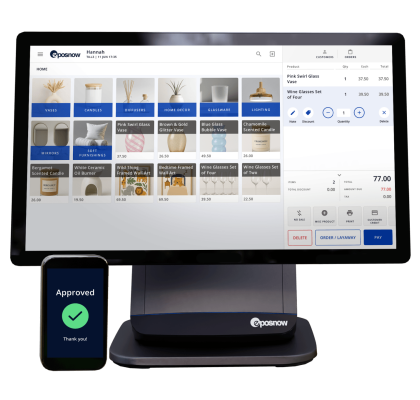
Nothing revitalises your business like an Epos Now system. With user-friendly, simple business solutions, you can integrate all parts of your operation into one time-saving system. Epos Now customers benefit from:
- In-house and third-party software for the very best choices for accounting, marketing, loyalty programs and much more
- Streamlined transaction programs that save staff and customers time, with the flexibility to create the system that suits your needs
- Cloud-based technology that gives management full control and access no matter where you are, with programmable access for different parts of the organization for added security

Back to school marketing strategies
Data shows that businesses looking to take advantage of the back-to-school sales boom can benefit enormously from having delivery and online shopping options as well as a brick-and-mortar store[3]. Despite foot traffic comprising 49% of the market, free delivery at this busy time can provide a valuable option to students and teachers short on time and in need of materials.
With printed media sales on the out and such saturated markets, retailers’ school marketing ideas can have greater effect and efficiency by going virtual[4]. This means working to cultivate three main virtual marketing channels: email, online and social media.
Not only can websites record cart abandonment from your online store, but retailers now send targeted emails to potential customers that failed to complete a purchase after signing up and placing products in their basket.
Cart abandonment emails have some of the most significant effects of any marketing. They can be automated, so they take very little time or money to produce and have an excellent conversion rate[5].
Email marketing takes many forms, though, and your business can reignite relationships with customers by contacting them before the school year. Contacting your customer base at this time demonstrates the availability of your products and places you at the forefront of their mind. Given its cost-effectiveness, a well-timed, seasonal email provides an excellent way to utilise this tried and tested strategy.
Online advertising
A robust online presence in the form of a website with sales capabilities, blogs that can help boost the visibility of your website, a Google Business account and local inventory advertising have multiple positive effects on trade.
Local inventory advertising is a key part of any marketing strategy, even for businesses without websites. They activate when someone in the area searches for a product you sell. Therefore the company only pays for the advert when someone expresses interest in a product. This makes local inventory advertising a wonderfully precise marketing technique.
In the case of back-to-school shopping, boosting inventory advertising means paying only for the student/parent/teacher demographics to see your school product range. However, an online presence can also generate sales for the business passively. Google Business costs nothing and allows users to post reviews so that when shoppers search for your kind of retailer, you appear as a creditable business backed up by past customers.
Social media
Building on the cheap marketing potential of email and online marketing, social media offers yet another free publicity platform for retailers. Customers that have positive experiences with retailers regularly follow their social media accounts in the same way (though perhaps more often) they sign up for marketing communications.
Posting about promotions and special offers, sharing images of the new back-to-school range, and even related articles can build awareness of the store even among those indirectly associated and who haven’t visited before. A share or like from one customer can introduce another, potentially connecting students, parents, and teachers.
Back to school promotions, bundles and special offers
Nothing draws attention to a product better than a special offer. An attention-grabbing promotion draws the eye and leads customers to assess how good your deal might be.
With back-to-school promotions, retailers take a number of approaches.
- Product bundles: A back-to-school kit provides a classic selection of school shopping essentials in a good deal for customers and retailers alike. Retailers make more by selling multiple products, and customers get excellent savings.
- Promotions: With customers looking for savings, discounts, 2-for-1 offers, or a percentage off on sales over a certain amount can inspire families to buy a larger number of supplies.
- Special offers: Everybody likes getting special deals. Offering students or teachers an offer can sometimes be more enticing than a general promotion. A percentage off, a loyalty discount, or any kind of special offer can make parents feel especially valued by the business which can bring customer loyalty with the initial sale.
Capturing the back to school market early
Parents buy lunchbox products and stationary top-ups regularly throughout the school year, but once their routines settle, they're less likely to change their habits. The retailer they start buying from often wins a school year's worth of sales, from snacks and drinks to replacement pens, notebooks and uniform items as the months go by.
A school sale and accompanying marketing campaign should begin well before term starts, giving adverts and word of mouth time to build awareness of your offers. Aim to have stock in place and promotions live as the holidays begin, when many families start planning their lists.
Starting early also gives you time to test what works. Use your POS data from previous years to see when school sales picked up, which products sold out first and which offers performed best. You can then reorder bestsellers before suppliers run low, and reach families before your competitors do.
Key takeaways for back to school marketing techniques:
- Stock the right range, from uniforms and stationery to electronics and specialist items competitors lack.
- Use POS reporting and basket analytics to see which offers work, and make room for checkout displays.
- Market across channels: email, local inventory ads, Google Business and social media.
- Draw shoppers in with bundles, promotions and special offers for students and teachers.
- Launch campaigns early, because families usually stick with the retailer they choose first.
Want to run more effective retail campaigns in your business? Whether you're looking to expand your sales channels, capture more customer data, or you're just looking to run a more effective retail operation, business tools like Epos Now's retail POS system make it easy to adapt throughout the retail year, whether for back-to-school, Black Friday, Christmas, or even to meet challenges specific to your business.
Like this blog? You may also like:
Frequently asked questions
- When should retailers start back-to-school marketing?
-
Start well before the school year begins so adverts and word of mouth has time to build awareness. Timing matters because families who settle into a routine with one retailer rarely switch. The first store they buy from can earn a whole school year of repeat sales, including regular lunchbox purchases.
- What products sell best during back-to-school season?
-
Uniforms make up a large share of the market, but stationery, pencil cases, backpacks, notebooks, lunch kits, electronics and specialist equipment such as protractors all offer strong profit potential. Less common items, like art smocks and wet-weather gear, can be harder to find, so research what nearby competitors lack and stock items that fill those gaps.
- What's the best way to promote back-to-school deals online?
-
Combine email, online advertising and social media. Local inventory ads show your stock to nearby shoppers searching for products you sell, and you only pay when someone shows interest. A free Google Business profile with reviews builds credibility, while automated cart abandonment emails and social posts featuring your new range keep deals in front of families.
- Should retailers offer back-to-school discounts or bundles?
-
Yes. Back-to-school kits bundle essentials into one good-value purchase, so you sell more items while customers save. Discounts, 2-for-1 deals or percentage-off thresholds encourage bigger baskets. Targeted student or teacher offers can feel more personal than general promotions, making families feel valued and more likely to return.
- How much do families typically spend on back-to-school shopping?
-
UK parents expect to spend an average of £452.40 per child, the equivalent of £2.3 billion nationally, covering uniform, stationery and technology. Primary school parents spend the most, at an average of £490.80 per child, according to research from retail marketing consultancy Gekko.
Epos Now solutions are the trusted foundation of over 80,000 businesses all over the world!