UK Tipping Culture: Norms, Etiquette & How Much



This is all a world away from the US, where tipping is baked into how service staff are paid and 15–20% is treated as close to compulsory. In Britain, tipping has traditionally been a discretionary thank-you rather than an expectation, which is exactly why so many people now feel wrong-footed when the screen turns towards them and starts counting down.
This uncertainty around tipping is reflected in what people are searching for online. Searches for "what to tip" are up by +1,500% and "how to tip" by +1,250% over the past 12 months, according to Google Trends.*
Jacyn Heavens, CEO of point of sale provider Epos Now, has shared insights into what's driving this shift in UK tipping norms, what you're entitled to do about it as a consumer, and how to manage tipping when confronted by that screen. But first, what is tipping like in the UK?
The history of UK tipping culture
Tipping in Britain is older than people assume. Historians trace it back as far as sixteenth-century England, when guests would slip household staff a few extra coins, known as "vails," as thanks for good service. Some accounts also point to seventeenth-century London coffeehouses, where patrons dropped money into urns marked "To Insure Promptitude," giving us the word "tip" itself. For centuries it stayed a discretionary, cash-based gesture rather than a system.
That's now changing quickly. To begin with, the Employment (Allocation of Tips) Act, in force since October 2024, requires all tips to reach staff in full. Meanwhile, hospitality payments data shows the proportion of transactions that include a tip has fallen from around 10.9% in June 2024 to roughly 5.5% by February 2026, while the average tip given has nearly tripled over the same period, from £4.87 to £14.39, according to Paynt's URocked platform. Fewer people are tipping, but those who do are tipping considerably more.
Why are people stressing about tips?
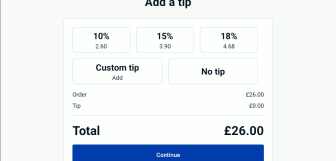
The developments in payment technology are changing the way businesses ask for tips. Think of the moment a screen or a server puts you on the spot to decide, often while they're standing right in front of you, how much someone else's work is worth. Suddenly, you find yourself hesitating over the machine with a flush of embarrassment as you press "no tip," or even overpaying just to avoid an awkward pause while someone watches you choose. For many people, it's less about the money and more about being watched while making a value judgement in public. Left unchecked, it can make everyday transactions, buying a coffee, paying for a haircut, settling a bar tab, feel weirdly loaded, and it's a big part of why searches for tipping guidance have spiked so sharply.

7 things for business owners to know about tipping
1. The tip does actually have to go to staff (by law!)
Since October 2024, everything paid as a tip legally has to reach staff members. If someone's hesitation is "is this just going into the till," that's the one fact that should change their thinking. Under the Employment (Allocation of Tips) Act, in force since 1 October 2024, businesses can no longer legally keep any part of a tip or service charge, it all has to be passed to workers, and employers are required to have a written policy on how it's shared out. People are also entitled to ask a venue to see that policy if they want to know how it works there specifically. So, as a business owner, it's important to have a printed version of your tipping policy.
2. Make declining genuinely easy
However the incentive works on your side, a tip prompted before any service has actually been delivered has to remain entirely optional, both legally and in how it feels to the customer. Make sure your card machines have a clear "no tip" or "skip" option, not one buried behind extra taps or shrunk down next to the presets. Train staff never to comment, react, or so much as glance at the screen when a customer chooses not to tip. A customer who feels judged for declining is less likely to tip generously next time, so a smooth, unremarked-upon "no" is better for repeat custom than a guilt-tripped "yes."
3. Don't let your machine ask twice
If you already add a discretionary service charge to the printed bill, check that your card machine isn't also defaulting to a separate tip prompt. It's rarely deliberate, but it happens when POS settings aren't reviewed alongside menu or till updates, and it leaves customers either double-paying without realising or feeling stung when they spot it. Audit your setup so the bill and the machine tell the same story, and make it easy for staff to explain the difference if a customer asks.
4. Set sensible default percentages
There's no rulebook that says 10%, 12.5% or 15% is the "correct" figure to suggest, so choose presets that reflect your typical bill size and service style rather than copying a competitor's. Presets that feel steep for the transaction, a 20% default on a £3 coffee, for example, tend to suppress tipping altogether rather than encourage it. Always leave a custom amount option available, and consider testing lower or more varied presets if you're seeing a high rate of customers skipping the prompt entirely.
5. Keep your tronc moving quickly
Card tips are pooled and distributed through a tronc, which is entirely legitimate and, since October 2024, legally required to pass on the full amount to staff. But a slow or opaque tronc process undermines trust, both from customers who want to know their tip actually lands with the person who served them, and from staff who are relying on it. Distribute tronc payments as promptly as you can.
6. Only prompt for tips where they make sense
There's no obligation to apply restaurant-level tipping prompts to a counter order, a takeaway coffee, or a machine where the customer served themselves. A large part of customer stress comes from tip prompts appearing in situations they were never designed for, and customers can sense when a prompt feels disconnected from any actual service. Review where your tipping screens appear and consider switching them off for self-service or minimal-contact transactions, matching the prompt to the level of service given tends to build more goodwill than tipping everywhere by default.
7. Train staff to give customers space
Most modern card machines are designed to be handed to the customer precisely because deciding under someone's gaze is uncomfortable, so make the most of that design. Train staff to step back, look away, or busy themselves with something else while a customer is on the tipping screen, rather than hovering or making conversation. Where a machine can't be handed over, consider positioning the screen so it isn't easily visible to staff. Small operational habits like these do more to put customers at ease, and protect your average tip, than any amount of messaging on the receipt.
The bottom line
The fact is, UK tipping culture is changing faster than the etiquette around it. Since October 2024, the law guarantees every tip reaches staff in full, but how much, when, and whether you tip at all remains entirely your choice. Checking the bill for an existing service charge, using the custom amount option, and remembering that staff aren't scrutinising your decision can take most of the pressure out of the moment. Tipping doesn't need a rulebook: matching what you give to the service you actually received is enough.
*Search data collected from Google Trends correct as of 8th September 2026.
Frequently asked questions
- What percent of people don't tip?
-
Nearly a quarter (24%) of Brits say they'd rather not leave a tip at all, according to a Dojo survey. Willingness varies a lot by age and situation, though, younger diners tend to tip more generously than older ones, even on identical bills.
- What does Dave Ramsey say about tipping?
-
Ramsey encourages generosity for genuine service, saying he tips valets and hotel staff "outrageously." But he's vocal about refusing tip prompts on flipped screens at counters, calling them a guilt trip. His view: tip based on real service, not social pressure or automated nudges.
- How to stop anxiety over money?
-
Track spending so uncertainty has less room to grow, build a small buffer for the unexpected, and limit comparing your finances to others' online. Talking openly with someone you trust also helps. If money worries feel constant or overwhelming, a financial advisor or therapist can offer proper support.
- What is money dysmorphia?
-
Money dysmorphia is a distorted view of your financial situation, feeling behind, insecure, or inadequate even when your finances are actually stable. It's often fuelled by social media comparison and disproportionately affects younger generations, with surveys suggesting around three in ten adults report experiencing it.