
Best POS System - The Ultimate List


With dozens of POS systems competing for your business in 2026, the choice has never been more consequential, or more confusing. What used to be a straightforward decision about taking payments is now something more. Today's POS systems manage inventory, run loyalty programmes, handle staff scheduling, connect to your accountancy software, and give you real-time visibility across every part of your business.
So how do you choose the best POS terminal for your business? And what are the best POS systems currently available? Don't fret, we've got you covered here at Epos Now. This guide cuts through the noise with an honest, up-to-date comparison of the best POS systems and best EPOS solutions available in 2026.
We've taken into consideration both customer reviews and industry experts to create the ultimate list of POS systems that you, as a savvy consumer, want to know about. By the end of this guide, you'll know the following:
-
The best point of sale system for retail and hospitality businesses, including Epos Now
-
The difference between POS software and hardware
-
How to create a strategy for selecting the best POS system for your business
But before we get to the best POS systems themselves, we need to cover a few basics.
Point of sale (POS) systems - what are they?
A point of sale (POS) system is a computerized system used by businesses to track sales and with inventory management. A POS typically consists of a touch screen, barcode scanner, cash drawer, receipt printer, and magnetic card reader. It can also include features such as a customer database, kitchen video monitor, and table management software.
Modern POS systems differ from traditional tills in that they are much more efficient and offer many more features. For example, a modern POS can track customer data and generate reports that provide valuable insights into sales trends. By relying on digital technology to automate several tasks, a merchant is able to get more done in less time.
Modern POS systems are the cornerstone of trading. Without one, it'll be tough to measure up to your competition.
What makes a good POS system?
Not all POS systems are built the same, and the right choice depends heavily on your business type, size, and how you actually operate day to day. With so many great options on the market, how do you even start evaluating? Here are some factors that we think are useful to consider when comparing systems.
Ease of use — A system your staff can learn in an hour is worth more than one packed with features nobody uses. Look for intuitive interfaces and a short setup time.
Features vs price — More features isn't always better. The question is whether the features included justify the monthly cost for a business at your stage.
Payment processing fees — Some providers are transparent about rates. Others bury fees in the small print. Always check transaction fees, not just the headline software price.
Integration depth — Your POS should connect cleanly with the tools you already use — accounting software, delivery platforms, loyalty programmes, and more.
Hardware options — From handheld card machines to full countertop setups, hardware flexibility matters, especially if your business moves around or operates across multiple sites.
Customer support — When something goes wrong mid-service, response time is everything. Check what support is actually included in your plan.
Scalability — The best system for a single-site business today should still work when you open your third location.
Retail POS systems vs. hospitality POS systems
Retail POS systems are designed to meet the needs of retail businesses. Retail POS systems include features such as inventory management, customer databases, and reporting tools.
Hospitality POS systems (or restaurant pos systems) are ideal for restaurants, hotels, bars, and other service-based businesses. These systems usually have fewer features than retail POS systems but can still track sales and loyalty programs. They also include kitchen video monitors and table management software which allow businesses to quickly process orders in busy environments.
Some companies specialize in both retail POS and hospitality POS systems, providing a range of features that can support both types of businesses. Others offer more specialized solutions that focus on a single type of business and some just provide a simple POS solution for small businesses. With this in mind, choosing the best POS system for your business depends a lot on the type of business you run. But we'll get more into the specifics of selecting the best POS system for your business soon.
Cloud based system vs. mobile POS systems
When deciding between a cloud-based system and mobile POS, you should consider the type of business you run and the features you need.
Cloud-based systems are great for businesses that have multiple locations or need to manage inventory across multiple stores. They can also be used by businesses with mobile sales, such as food trucks and pop-up shops since they don't require any hardware installation. Cloud-based systems can also be accessed from anywhere, making it easier to monitor business operations remotely.
Mobile POS systems are great if you only have one location and want a more portable solution. Many mobile POS solutions offer integrated payment processing and other features like loyalty programs and customer data management. Mobile POS is also cheaper than cloud-based systems since there's no need to purchase additional hardware. Using a mobile device also means you can take on-the-go payments and process them wherever you are.
Do you need a POS system?
Yes, you do need a POS system to run your business. As technology evolves, it has become an essential tool for all businesses that are looking to increase efficiency and reduce costs. Without one, you will not be able to compete with your competition in the market.
Why is a POS system important?
Businesses of all sizes can benefit from using a POS system. Here are three reasons why:
-
Increased efficiency: A POS system automates many tasks, which allows employees to be more productive. This leads to increased efficiency and faster service for customers.
-
Improved accuracy: With a POS system in place, businesses can reduce the likelihood of human error when it comes to tracking sales and with inventory management. This leads to improved accuracy and fewer mistakes.
-
Enhanced customer service: A good POS system will allow businesses to track customer data such as purchase history and preferences. This information can be used to provide personalized service and increase customer satisfaction.
Now that you know why POS systems are important for your business, we'll take you through the factors you need to consider when purchasing your very own POS system.
Types of businesses that need a POS system
A POS system is useful across almost every type of business that takes payments, but some sectors benefit more than others. Here are the most common:
-
Beauty salons: Beauty salons need flexible payment processing options. A POS system can help them keep track of customer appointments and accept payments.
-
Food trucks: Food trucks need a mobile POS system to run their business. A portable system such as the Pro+ mobile POS gives them the flexibility they need to accept payments on the go while also providing features such as online ordering and customer relationship management (CRM).
-
Restaurants: Restaurants need fast, reliable service to process payments. A restaurant POS system can help do just that while also providing advanced features such as kitchen video monitors, online ordering, and table management systems.
-
Hotels: With a POS system, hotels can keep track of customer check-ins and out, manage staff schedules, bookings, and reservations. They also provide advanced features such as loyalty programs that help hotels increase their revenue.
- Retail and clothing stores: Need strong inventory management, barcode scanning, and loyalty programmes to track stock and keep customers coming back. A magnetic card reader ensures fast, accurate payments at the till. For more details, why not find out more about the best POS system for retail?
-
Online store: A POS system for an online store can help automate order processing, provide secure payments, and manage customer data. Features such as inventory management and shipping management are also available to make running your business more efficient.
TIP: Check out our retail POS system and hospitality POS solution to learn more about the features they offer. With our solution, you can accept payments quickly and efficiently while providing customers with an enhanced experience. Plus, you get everything from a single portal, all managed by one payment provider at one fixed rate.
One system at the core of your business
One system at the core of your business
- Multi-site and omnichannel employee management and inventory management tools, all in one place
- Detailed sales analytics that reveal top performing products and employees
- Integrate with a fully loaded ecommerce platform that syncs with the best retail pos systems
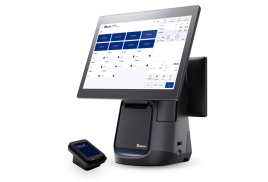
Factors to consider when choosing the best POS system
Like any other item, there are many factors you have to consider when choosing a POS. This technology needs to tick all your boxes, so it's good to figure out what you need it for and how you'll be using it.
What kind of business do you own?
The kind of POS system you choose will depend on the kind of business you have. For example, a restaurant will need different features than a retail store.
Take some time to write down all the things you'll want your POS system to do. These things could include things like:
-
Create sales reports
-
Inventory management features
-
Staff management
-
Integrations with applications you use
-
Hardware options
-
Multi-site and omnichannel store management
-
Accept all types of payments.
POS system cost
Cost is one of the most important factors when choosing a POS system in 2026, but the cheapest option rarely turns out to be the best value. A lower monthly fee can quickly be offset by higher transaction costs, expensive hardware, poor support, or a system that can't grow with your business.
When comparing costs in 2026, look at the full picture: hardware, software, payment processing fees, and any add-ons you'll actually need. A system that's transparent about pricing from the start is usually a good sign. One that buries fees in the small print rarely is.
POS hardware
You may assume that all POS systems are the same. This couldn't be further from the truth!
Many POS systems companies offer a range of hardware options, from traditional over-the-counter tills to tablet systems and card machines. Some companies offer entire POS systems that fit in the palm of your hand so you don't have to deal with clunky tills!
The type of hardware you choose will also be determined by the kind of business you have. For example, if you own a restaurant and you're looking to buy handheld card machines, you'll want hardware that's drop-resistant and waterproof. This will be especially useful for businesses that have outdoor locations.
POS software
While hardware is important, so is software. Finding the best point of sale software for your business is just as critical as the hardware it runs on, otherwise your POS system isn't worth a hill of beans.
Most POS systems come with proprietary software that only works with their till systems. Others integrate with popular operating systems like Android and iOS to make their systems more versatile.
Most POS systems will also integrate with popular business applications. If you're running a convenience store, for instance, you'll need to integrate with great inventory management and accounting software to make sure your business runs smoothly.
Integrations
When choosing a POS system, you'll need to make sure that it can integrate with the apps and services you use.
For example, if you have an email marketing platform like Mailchimp, your POS system should be able to sync up with them so that all customer data is seamlessly shared between the two systems. This will save you time and money as it eliminates the need to manually transfer customer data.
You may also want to look for POS systems that integrate with loyalty programs, so customers can easily earn points or rewards when they make purchases. This will help build a loyal customer base and increase repeat business.
You'll also want to make sure your POS system integrates with accounting software like QuickBooks or Xero. This will ensure that all of your sales transactions are automatically synced and recorded, making it easier for you to keep track of the financial health of your business. If you own a restaurant, you'll want to make sure your POS system can integrate with online ordering systems. With more and more customers opting to order food online, you'll want a solution that will make it easy for them to do so.
Payment processing
When it comes to payment processing, the cost of your POS system will be determined by how you process payments. If you're opting for a traditional payment processor, you'll typically pay payment processing fees.
However, if you opt for an all-in-one payment processing solution, you may find that you're able to save money in the long run. All-in-one payment solutions are typically sold as a packaged deal and include payment processing plus additional features like fraud protection.
Integrated payments are not only more secure, but they also make payment processing easier. For example, if you're running an online store, integrated payment solutions give customers the ability to check out quickly and securely without having to leave your website. Or, if you own a hospitality venue, integrated payment solutions can make it easy to process payments and tips without having to open a separate payment terminal.
No matter what payment processor you choose, make sure it's one that is secure and reliable so your customers can have peace of mind when making purchases and you can process payments seamlessly. Being PCI-compliant is also a must, as it ensures that your payment processor meets the industry's most rigorous standards for payment processing.
TIP: Interested in our payment processing services? Find out more about how we can help your business to accept payments quickly, safely, and securely.
Do you need a cloud-based system?
Before diving into whether or not you need one, let's first understand what a cloud-based POS system is. A cloud-based system uses the internet to process payment information and store customer data rather than storing it on local servers or physical equipment.
Cloud-based systems are becoming increasingly popular as they typically require fewer upfront costs and offer more scalability. This makes them ideal for businesses with multiple locations and those who are looking to expand. Additionally, cloud-based systems can be more secure as customer data is stored in the cloud and protected by industry-leading security measures.
Here are some considerations to help you decide:
-
Is your business growing? A cloud-based solution may be the best option for businesses that are expanding, as it makes it easier to scale up or down as needed.
-
Are you able to hire an IT team? If you have the resources and technical know-how available, then a cloud-based solution may be the best choice.
-
How secure do you need your payment processing to be? Cloud-based systems are generally more secure than local solutions, making them a great choice if payment security is a priority.
-
Do you plan on integrating other applications, such as loyalty programs and accounting software? Cloud-based systems typically offer more flexibility and make it easier to integrate other applications.
-
Are you looking for a cost-effective solution? Cloud-based payment solutions tend to have lower setup costs, monthly fees, payment processing fees, and transaction fees than local solutions.
Ultimately, the choice between a local and cloud-based POS system will come down to your individual business needs. Consider all of your options before making a decision, and make sure you're getting the best value for your money. With the right POS system in place, you can significantly improve operational efficiency and streamline payment processing so you can get back to focusing on growing your business.
Inventory management features
Inventory management is an important part of running a successful business, and the right POS system can make it easier to track inventory levels and ensure that you never run out of stock. Many modern POS systems offer inventory management features such as item tracking, order tracking, reordering notifications, automated ordering processes, and more. These features not only help you stay on top of your inventory levels, but they can also help you save time and money.
Let's see this in action. Suppose you own a small boutique, and you need to track the inventory of multiple items across multiple locations. With a cloud-based POS system, you can easily check stock levels in each location from your computer and order more when needed. You can also set up automated notifications to remind you when it's time to reorder certain items. Not only does this save time, but it helps you avoid overstocking, which can result in costly losses.
Similarly, if you own a small cafe, you can use a POS system to track the ingredients needed for certain dishes and ensure that you always have enough on hand. This eliminates the need for manual tracking and helps you stay organized, saving time and money in the process.
Employee management
Finally, many modern POS systems offer staff management features to help you manage your employees more effectively. Features like scheduling and time tracking can help you ensure that staff are working the appropriate hours, while employee permissions ensure that only authorized personnel has access to sensitive information. You can also set up alerts for sales goals, which will remind employees when they need to get back on track.
These staff management features are especially useful for businesses with various departments or locations, as they help you ensure that everyone is working towards the same goals.
So when considering the best pos systems for your business, don't forget to look for those that offer the right combination of features. Depending on your specific needs, a local or cloud-based system may be more suitable—but by taking advantage of all the features offered by a modern POS system, you'll be sure to get the most out of it.
Best POS Systems for small business owners
#1 Epos Now
Starting off strong, Epos Now has become one of the leading cloud-based POS systems in the market. It offers a host of features, from loyalty programs and automated online ordering to staff management and stock tracking. Plus, it's incredibly easy to set up—you can have your system up and running within minutes. And with its reliable security measures, you can rest assured that your data is safe and secure.
The company was launched in 2011 by founder and CEO Jacyn Heavens and is currently available in the United Kingdom, Ireland, the United States, Canada, Australia, New Zealand, Spain, and Mexico. Before starting Epos Now, Jacyn worked in a bar and struggled to find affordable, easy-to-use POS systems, which inspired him to develop a simpler and more cost-effective solution.
Let's look at some of the features in more detail:
Integrated payment processing:
Epos Now offers integrated payment processing, allowing you to accept multiple payment methods from one terminal. This eliminates manual data entry and reduces the risk of human error, resulting in faster transactions and better customer service.
Customers can get everything they need from one single portal, all managed by one payment provider. Plus, you're able to offer customers their preferred payment option and accept payments at a fixed rate (no hidden payment processing fees).
Inventory tracking:
Epos Now's cloud-based POS system makes it easy to keep track of your inventory levels in real-time, so you can rest assured that you always have the right supplies on hand. You'll also enjoy features such as item tracking, order tracking, reordering notifications, automated ordering processes, and more. These features not only help you stay on top of your inventory levels, but they can also help you save time and money.
Employee management:
Managing staff has never been easier with Epos Now's staff management features. With scheduling and time tracking, you can make sure that staff are working the appropriate hours. You can also set up alerts for sales goals, which will remind employees when they need to get back on track. Additionally, employee permissions ensure that only authorized personnel have access to sensitive information.
App store:
Epos Now also has an App Store with a wide range of partners and features, allowing you to create and enhance your experience even further. With apps for loyalty programs, marketing, analytics, and more, the possibilities are endless!
Some of the popular apps available include:
-
Epos Now Loyalty: create your own loyalty programs and reward customers for their repeat business
-
Epos Now Delivery: quickly and easily manage your delivery orders in one place
-
Order & Pay: let customers order and pay from their own device or via online ordering
-
QuickBooks: integrate your sales and financial data with Quickbooks
-
Mailchimp: automate your email marketing campaigns with Mailchimp
In summary, Epos Now is a great option for small business owners looking for an easy-to-use and secure POS system. With its integrated payment processing, inventory tracking, and staff management features, as well as apps from the App Store, it offers everything you need to get up and running quickly. Plus, their customer service team is always available to help out in case you encounter any issues.
#2 Square POS system
Next up is Square POS, another cloud-based POS system with a wide range of features.
From mobile payment processing and simple hardware setup to employee management, customer management, and detailed reports, Square offers all the POS features you need to streamline your business operations. Plus, it integrates with all major accounting systems, so you can get up and running quickly. Read our full Epos Now vs Square comparison to see how the two stack up.
#3 Lightspeed POS system
Lightspeed POS is a cloud-based software and hardware system designed for retail and hospitality businesses. The platform offers all the features you need to manage your inventory, staff, and customers, including advanced customer relationship management (CRM) capabilities.
Lightspeed POS offers automated marketing tools that make it easy to keep in touch with customers, while detailed reporting and analytics functions provide you with insights into your business performance.
#4 Toast POS
Toast POS is a restaurant-focused system that stands out for its features and affordability.
Toast is aimed at restaurant businesses and has everything you need to manage orders, payment processing, loyalty programs, staff management, and inventory tracking. The system is integrated with Toast Payments, so you can accept multiple payment methods without worrying about rate markups or extra monthly fees.
Plus, the hardware included in Toast's subscription plans, such as kitchen display systems (KDS) and touchscreen terminals, are designed to withstand the high-traffic environment of a restaurant.
Considering going with Toast? Check out how we compare: Epos Now vs Toast.
#5 TouchBistro
TouchBistro is a restaurant POS system specifically designed for restaurant owners and operators. It offers powerful POS features, like table management, kitchen display screens (KDS), and tableside and online ordering, that help you streamline operations and provide the best customer service possible.
The software also includes advanced reporting capabilities to give you insights into your business performance, as well as inventory and staffing tracking.
#6 Zettle by PayPal
Zettle by PayPal, a simple and fairly basic POS software, offers business owners exactly what they need to get going. From enabling transactions to managing stock, this fuss-free software is intuitive and easy to use while also being free!
While Zettle doesn't have quite as many features as the other POS systems mentioned, it does offer some great benefits. For example, users get access to regular reporting and analytic functions, sales forecasting, and even staff tracking. Additionally, with its reliable security measures, you can rest assured that your data is safe and secure. Read the full Epos Now vs Zettle comparison now!
#7 Clover POS system
Clover POS, a powerful and user-friendly point-of-sale system for small and mid-sized businesses, comes with a wide range of POS software and hardware options to suit your specific needs.
The system includes features such as inventory management, customer loyalty programs, and detailed reporting. Plus, it's integrated with a variety of popular third-party services, from payment gateways to apps via the Clover app market, so you can get up and running quickly.
Clover isn't, however, the most affordable solution. It also lacks the transparency that some of its competitors offer, and it's sold by a variety of third-party resellers, which makes pricing and features difficult to compare.
Final thoughts
Choosing the best POS system for your business can be a challenging decision. With so many features and options to consider, it's important to take the time to evaluate your needs and make an informed decision.
In particular, pay attention to how much each option will cost, as well as its payment processing capabilities, reporting features, and hardware offerings. Finally, when looking for the best point of sale system, don't forget to consider what customer service the provider offers.
By keeping these points in mind, you can ensure that you choose the best point of sale system that meets all of your business's needs. Good luck!
Why choose Epos Now?
Curious about more reviews? Check out these comparison pieces we prepared for you below. You'll get all of the information you need to start your business the right way.
Want to find out more about our offer? Get in touch below!